

Andy Haas - The Flavor of the Game
/
Andy Haas, known as “Mr. Andy” to young chess players, homer, alaska
The popularity of the 2020 Netflix show, “The Queen’s Gambit,” has made playing chess kind of cool again. Homer resident, Andy Haas, says chess has never lost its appeal - not for 1500 years – and he spends many hours each week making sure that Homer kids have a chance to learn its strategy, rules, camaraderie, vibe, and even its flavor.
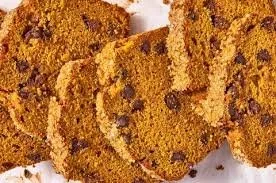
The “flavor” part of chess, at least at West Homer Elementary School, might be mostly due to loaves of pumpkin bread. Each week, Andy estimates he bakes 17 loaves of pumpkin bread to entice hungry, chess-curious kids to his weekly after-school chess sessions at West Homer. “I’m shameless about it,” Andy says. The bread draws the kids to the lunchroom for practice (the kids note that the bread is “pretty great”), but attendance and engagement with the game are what lead to the sweeter and more fulfilling rewards. “If you don’t play chess, you don’t get the bread!” Andy says, with an impish smile.
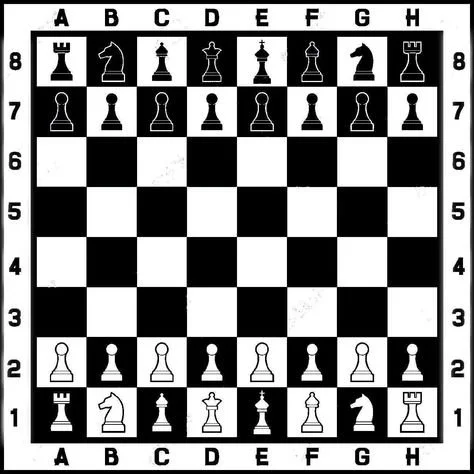
A retired lawyer (now with more time for baking and teaching chess), Andy played the game growing up and says he was inspired by Bobby Fisher, a chess prodigy and American chess grandmaster. “My parents had a wooden chess board they got for my brother,” Andy remembers. “Chess was at the forefront when I was in middle school, but there was no instruction.” Andy did, however, have unusual regular opponent: his middle school vice principal. “The vice principal was bored, and I was bored, so he paged me out of class to play chess,” Andy recalls with incredulity. “The bad boys were lined up in the office, and I was playing chess with the vice principal!”
Regular games are important for chess development, but Andy posits he would have benefited from some lessons. “It makes a world of difference to have instruction,” Andy says, which is why he teaches what he knows about chess to young players today. “Often, we begin with a puzzle, and the kids figure it out,” he notes. The third through sixth graders at West Homer “just jump in and focus. I am blown away by the thinking-ahead, the kids enthusiastically shouting out a solution over one another, yet they respect each other in their analysis. We teach them not to critique others for their mistakes, but to offer other ways of thinking about a solution, like, ‘Yeah, but what if we did that?’”
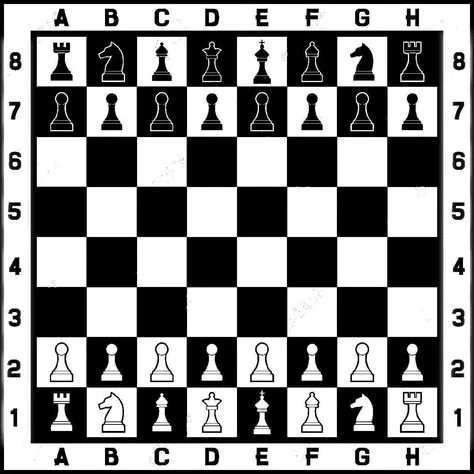
In the instruction, students learn to be both good winners and good losers. Andy has upwards of 30 students join him in his weekly sessions, and he notes that, often, the beginning players are eager learners, but perhaps poor sportsmen. “Mr. Andy!” a kid might shout when she or he wins a game at first, “Look at what I did!” Mr. Andy responds patiently with praise and restraint: “Yes! And to be a good winner is important. Are you making your opponent feel bad?” One lesson of chess is that winning is not everything. “Remember,” Andy says to his players, “You always lose with grace. You always win with grace. You always shake hands.” Then he tips his hand as a chess player himself: “You only learn by losing.” After a pause, he admits, “I stay awake regretting my losses.”
Andy is animated when he talks about the development of chess and as he describes chess as a vehicle for teaching history and geography, politics and the blending of world cultures. He is an enthusiastic guide through the world of chess: “Chess comes through Persia,” he instructs, “originated in India as a four-person game, and the modern iteration comes through Iran.” He continues: “Shah math is Persian for ‘The leader is in trouble,’ translated in English as ‘Checkmate.’”
Andy explains that the original chess pieces were tools to teach warrior skills and strategy, and that the pieces changed names and shapes and value as the game spread through southeast Asia in the 6th Century to the middle east, and then Europe. “Our castle piece today [rook] was originally a chariot. Rukh is Persian for ‘chariot,’ which, in translation, sounded like the Italian word for castle. It’s a mistranslation! Bishops were originally elephants [elephants being common in India; in Italy, not so much]. And: The queen was originally called ‘vizier’ [in Persian, meaning general advisor to the king]. Queens came to power in the Renaissance [like Queen Isabella of Spain, where chess became popular],” Andy notes, so the vizier was renamed queen and the piece was awarded expanded powers of mobility and strength.
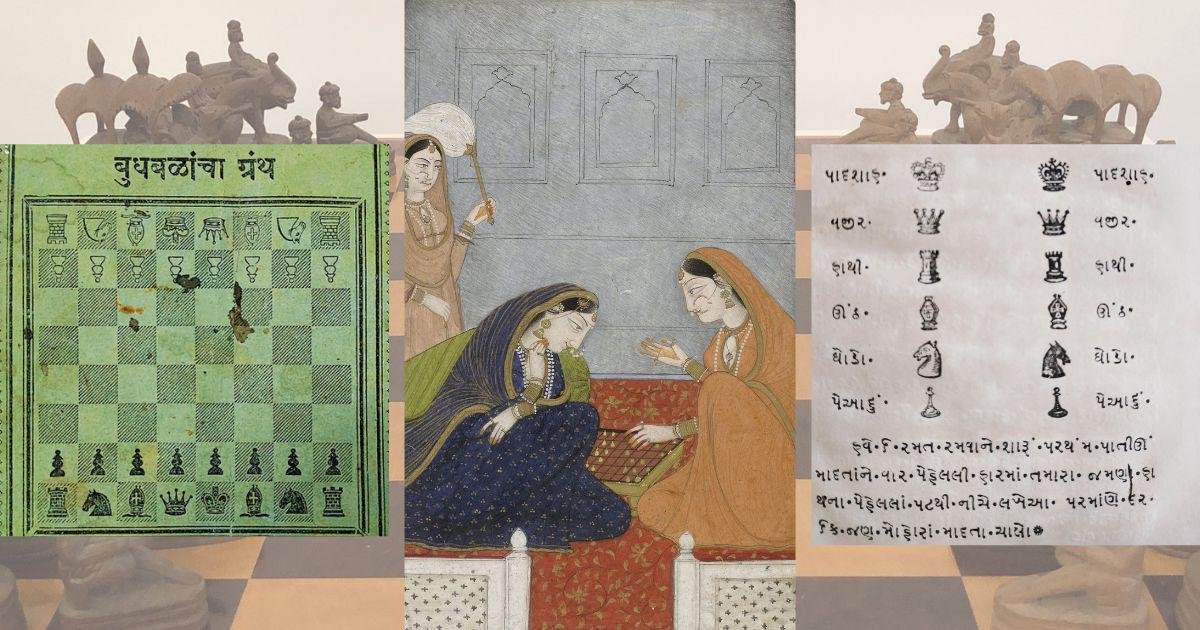
chess comes from india in the 6th century, traveled to persia then to europe and the world
One of Andy’s students, Max Fefelov, age 12, might not remember the nuanced global history of chess, but he has practical knowledge of each piece, a masterful grasp of the game, and a palpable joy in describing how and why he plays. “Castling” is one of his favorite tricks. “If you move your king two spaces,” Max exudes, “then the castle hops over it to protect the king,” the only two-piece move allowed in chess. He’s fond of “The Skewer” and “The Fork” moves, as well, and he enthusiastically explains to a chess novice that a ‘gambit’ just means the first move, and “bishops can go diagonally, as long as there is space, but the knights can jump over pieces, because they are horses!”
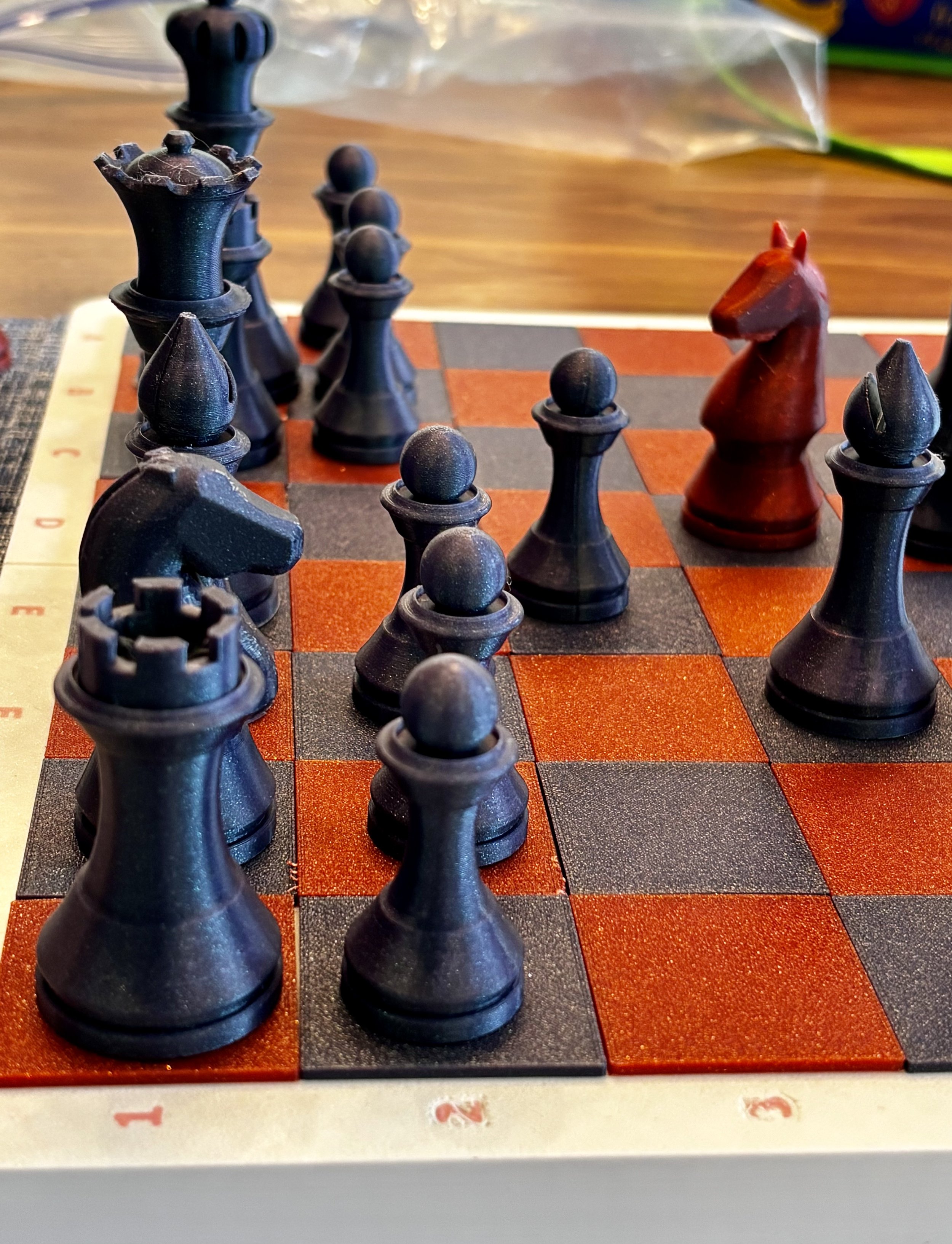
On this afternoon, Max arrives with his own chess board and pieces that he printed on his 3-D printer at home. His opponent is Dylan, also 12 years old and Max’s best friend. Max describes their play: “I’m moving my pawns up. I start with the pawn because it opens up everything.” Dylan concurs: “At the start, you match each other for 3 or 4 moves, and that opens up the board.”
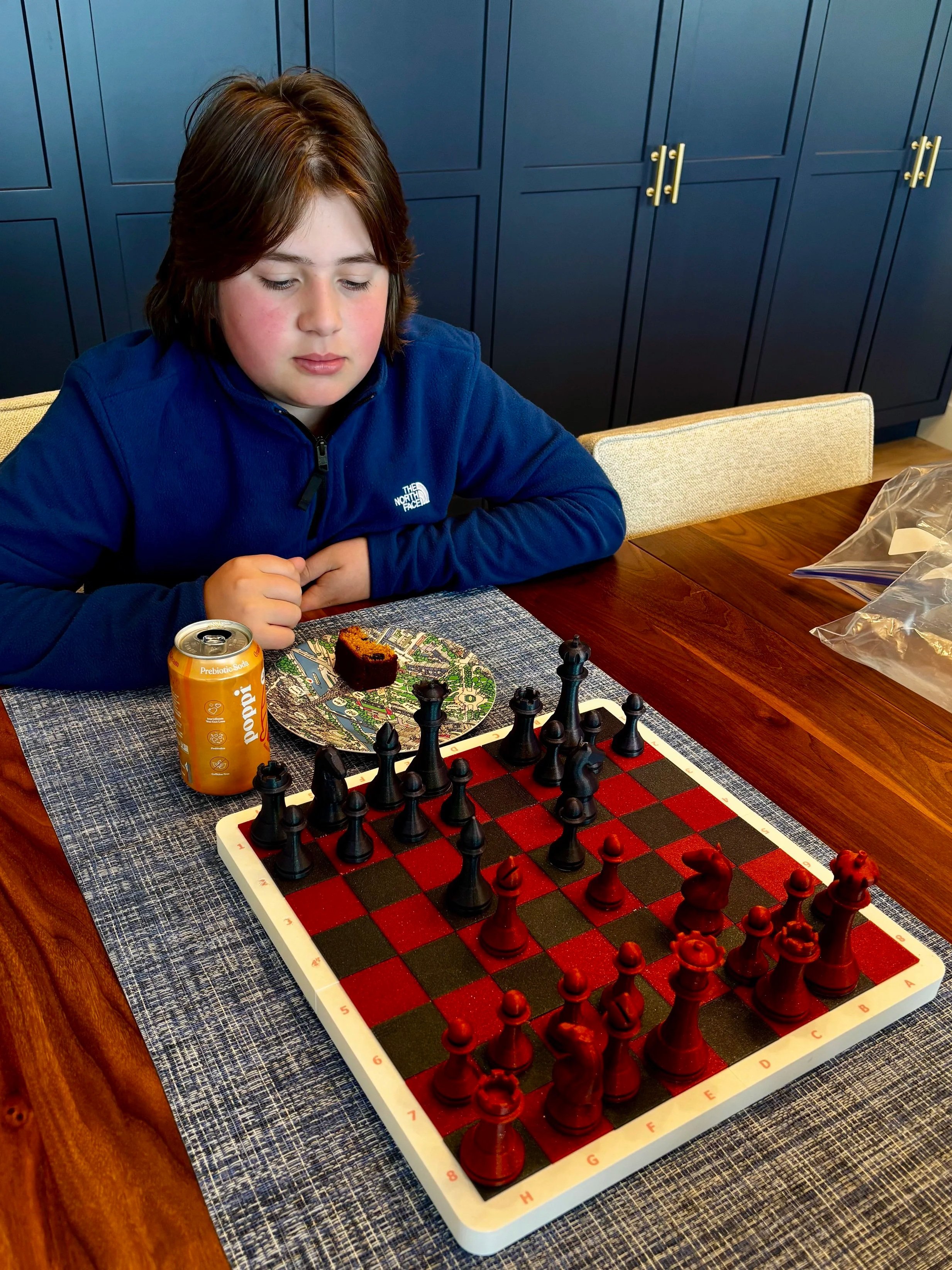
Max fefelov concentrates on a game
Neither Max nor Dylan are big talkers, but they are expressive and confident as they describe their games, engaging with opponents of different skill levels and even a grown-up who shows up to observe. Max shares his strategy at the outset: “I’m thinking ahead about 2 moves, and I’m thinking about what my opponent’s doing, and then what I am going to do.” Mostly, because he’s had so much practice, Max says he reacts pretty quickly to what his opponent offers on each turn. He’s memorized specific moves and strategies that can propel him to victory. He’s nonchalant about his speed: “It’s easy to play a 10-minute game. Sometimes we even do a 1-minute game,” he says with a shrug. Max says he likes playing Dylan best of all, because they have a similar quickness and love of playing. Asked how many times one of them wins over the other, Max responds: “No clue. We just play again.”
That camaraderie is exactly the point of modern day chess, according to Andy. He tells the story of how he took a job, early in his career, in Armenia, a place where he had no command of the language or local customs. “In Armenia,” he says, “chess is pervasive, everyone plays. It is a common currency. The largest number of world champions are Armenian; it’s a post-Soviet thing, it’s just expected.” Adjusting to his new life in Armenia was only slightly difficult for Andy, and he made connections easily: “I carried a chess board, so I could engage.”
Andy has taught hundreds of kids in Homer to play chess since 2018, and he is a ready practice partner and a good winner. Humbly, he credits numerous others for their contributions to strengthening the success of the free and wide-reaching program he leads. “This all started with one mother in Homer who was tired of hustling chess matches for her son in coffee shops,” he says. Seeing a need, Andy and others got to work: “The Friends of Homer Library offered space and resources for instruction; Colleen Evanco got to work planning; we set up a nonprofit to get chess boards and clocks; Eric [the principal] at West Homer worked toward a solution and helped us line up other schools for competition; Ed Sotello, the Special Ed teacher who offered chess at the high school 20 years ago, it was Ed who recognized that some kids - his kids - would do really well at chess, more so than in regular life.” Then, Andy adds, with emotion: “Chess is fertile ground for the broad spectrum of kids, like ADHD kids; it’s less about shades of grey, because it’s black and white.”
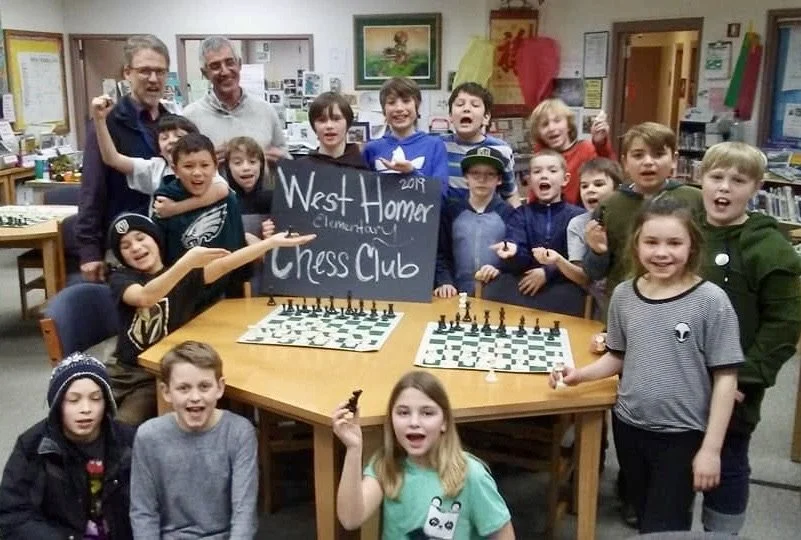
A recent wednesday at west homer elementary school chess club, courtesy of andy haas
Back to the loaves of pumpkin bread and the “flavor” of this particular chess program that Andy has so enthusiastically shaped in Homer. Max and his pal, Dylan, are still playing quick games and eating pumpkin bread, getting breadcrumbs all over the table, but not on the chess board. What is it about this game, this practice time together, that they like? Max says, “Mr. Andy is a good teacher.” “It’s fun,” agrees Dylan, without flourish and without taking his eyes off the chess pieces. Then Max waggles his finger between Dylan and himself and guffaws: “We got good because we’re 7th graders now!”
Resources:
West Homer Elementary School: https://kpbsd.org/schools/west-homer-elementary
Friends of Homer Library Chess Program: https://www.friendshomerlibrary.org/Chess-Club
Photos: Tracy Nordstrom, unless noted