

Emilie Springer - From Fish to Floats
/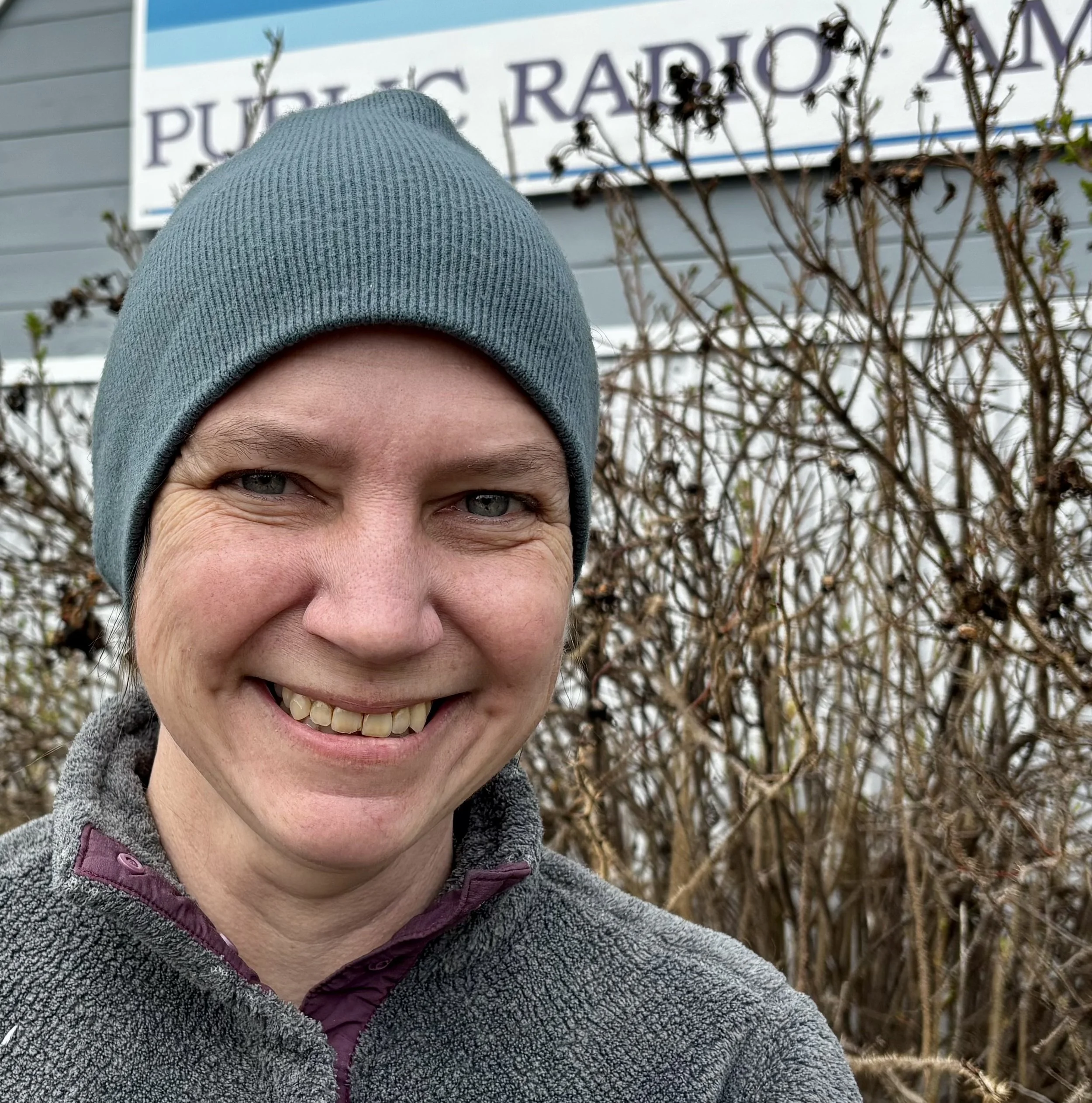
Emilie Springer outside KBBI public radio station, Homer, Alaska
It started with fish.
Emilie Springer, like many writers, has many interests, but for Emilie, her professional writing career started with fish. After finishing a Master’s Degree in Marine Affairs at the University of Washington, the Alaska Fisheries came calling. “Pacific cod,” says Emilie. “They needed someone to interview fisherman.” The organization was looking at different types of fishing across the state, examining how the industry was changing. “I grew up fishing,” Emily attests. “I was comfortable on boats.”
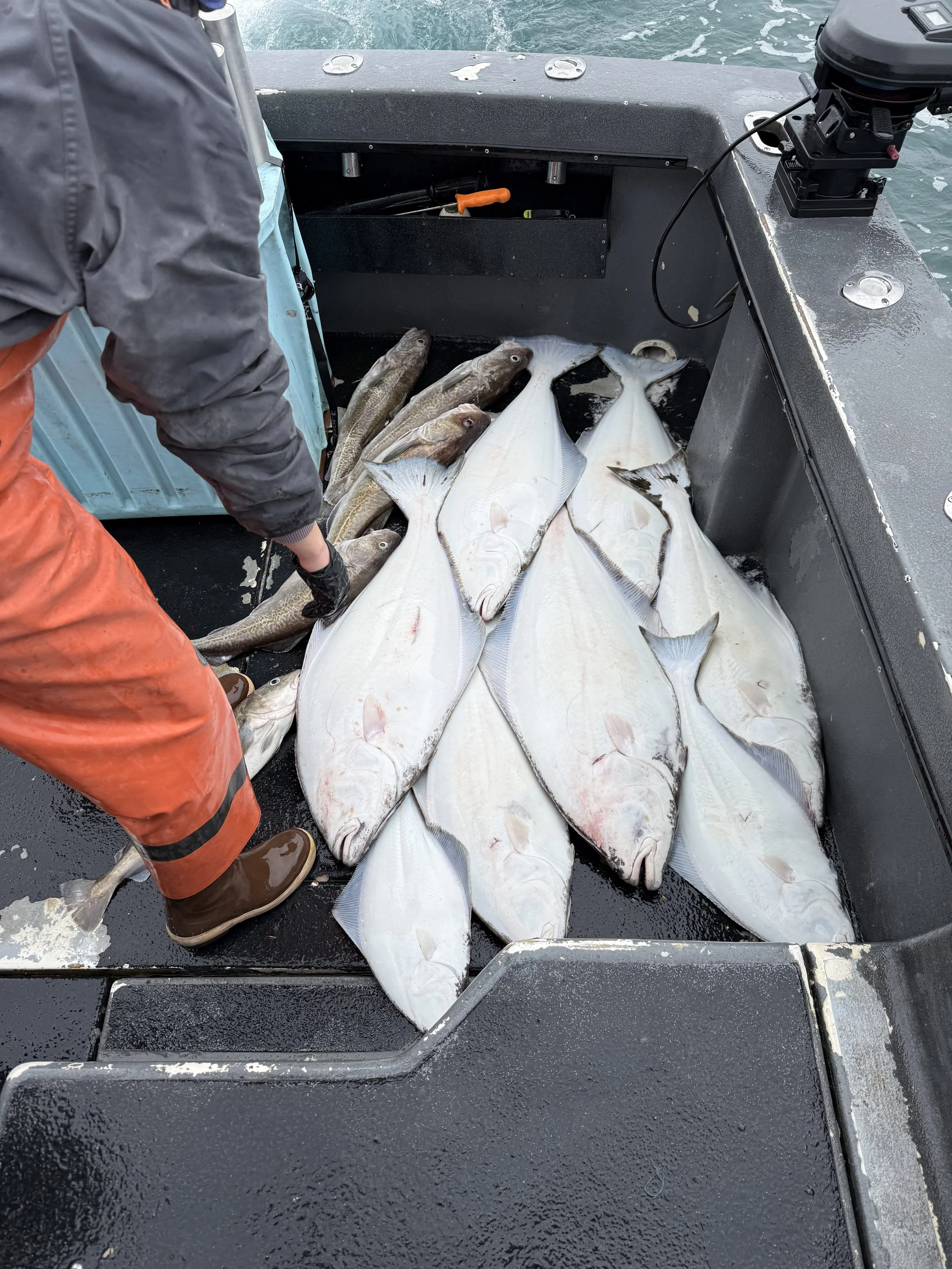
Halibut abundance in the waters near homer
These days, Emilie interviews of all kinds of people – not just fishermen, and mostly not on boats – and broadcasts her profiles for Homer, Alaska’s KBBI public radio station. She describes herself as a “hyper local” storyteller, spooling out - to Homer and the lower Kenai Peninsula - stories about the people of Homer and the lower Kenai Peninsula. On this day, five-and-a-half years into her KBBI tenure, Emilie had a scheduled interview that – ironically - DID include fish: “Seldovia [the village across Kachemak Bay from Homer] is having a non-motorized, a human-powered, fishing derby,” says Emilie. “Who does that?” she asks, “And why?”
That curiosity about people and the things they do drives Emilie to write and read aloud an average of 3 profiles of locals per week on KBBI. Her subjects range from geologist Bretwood “Hig” Higman who studies glacial landslides to Anchorage-based illustrator Lee Post teaching cartooning to young people at the Homer Library; from fiber artist Carla Klinker foraging and making cloth from stinging nettles to Two Sisters bake shop owners Carrie Thurman and Sharon Roufa on how they survived Covid and beyond. Her profiles are peppered throughout the KBBI radio broadcast day, with each lasting about 4 minutes, and her voice has become familiar to Homer listeners.
Jennifer Waltenbaugh, a lifelong Homer resident and fellow Homer High School graduate (though she’s a few years older than Emilie) says Emilie’s profiles “are like mini ‘This American Life’ stories,” referring to the longtime syndicated public radio show and podcast with host Ira Glass. Jennifer offers: “I’m always learning something new through Emilie’s stories, even though I’ve lived in Homer forever.” Jennifer often hears Emilie’s stories on her car radio while she’s headed to work or driving her kids around town. Sometimes she arrives at her destination before Emilie’s story is finished. “I always listen to the end,” she says, even after she has turned off her car. Captured in those moments, Jennifer says, “I like her unique take on life here.”
Homer public schools sparked Emilie’s early affinity for writing, and she honed her creative expression in college and graduate school. “My middle school teacher, Karen Wessel – who still lives here – gave us time on the trails with journals,” Emilie remembers, recognizing the braid of nature, storytelling, and place that still runs through her work. “My undergraduate work was in creative writing,” she notes, “fiction, at Stanford.” Then she earned her Master’s Degree in Marine Affairs; and finally, while completing a Ph D in Anthropology at University of Alaska, Fairbanks, Emilie’s academic focus shifted toward oral history. That’s where she sharpened her skills in interviewing and human profiles: “Personal stories are easier for me to write, to tell,” she admits. “It’s easier to find adjectives when talking to people…. It helps me to see where people feel comfortable - on a boat, in the galley space, with gear around them for the day; the trawlers, the local harbor, the drift fleet; the rain gear, and how well it is cleaned; comfort in the top house, with the radio going, the communications.”
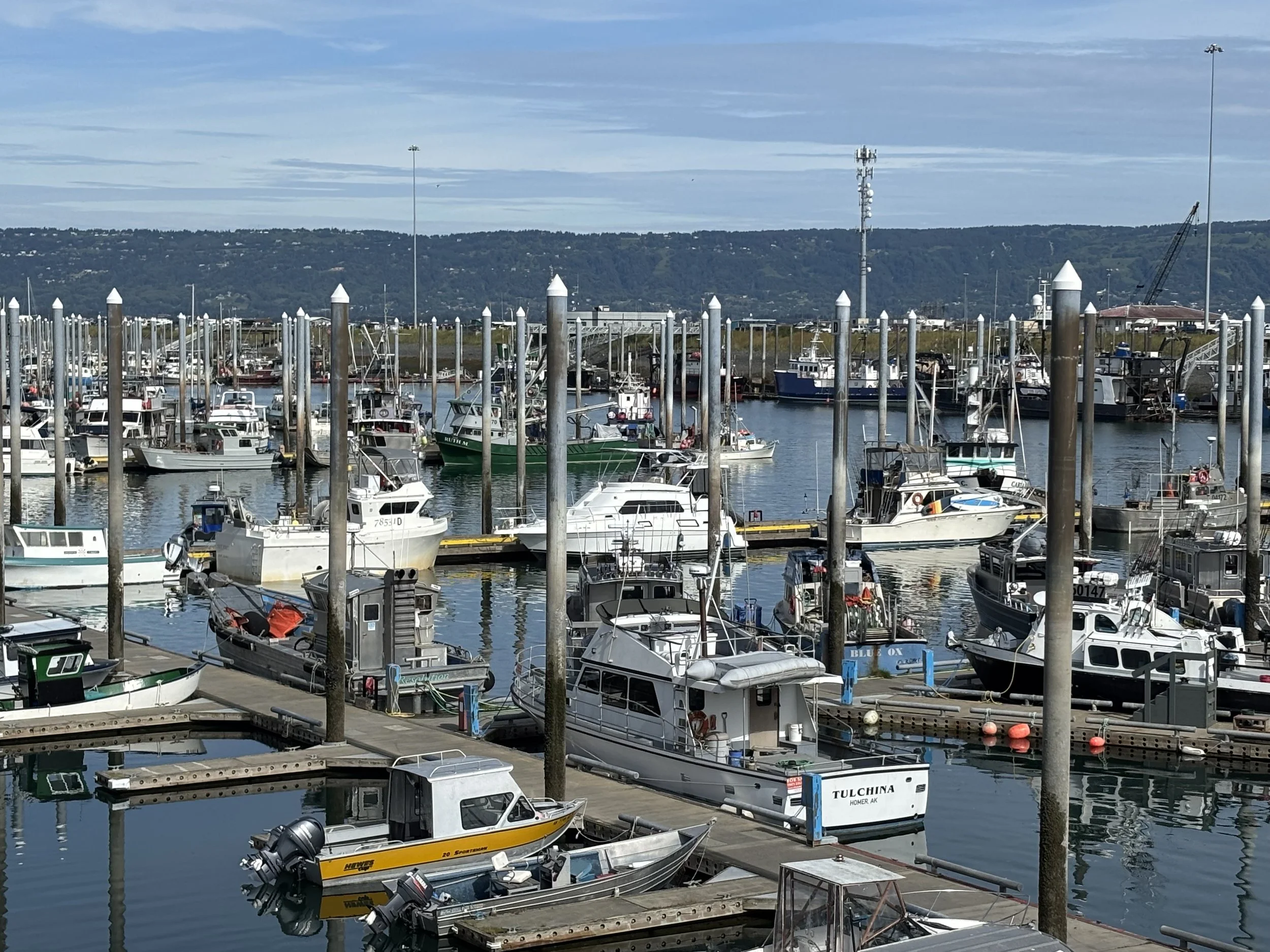
Homer harbor, with boats and fisher people of all types
Emilie says there are some stories that stick with her, noting that certain subjects and perspectives really capture her imagination. Early in her study of Pacific Cod for the Alaska Fisheries, for example, Emilie interviewed a fisherman in Cordova: “He was much older than me, had a large extended family, had fished the area a long time,” she recalls. The fisherman knew the stories of Cordova, had experienced transitions, recalled old and new traditions. He explained how his familiar place had changed over a hundred years, and how, perhaps, he had, too. Emilie says she appreciates her subject’s gradual understanding of circumstances, and their circumspection. “I like interviewing people who are as old as possible,” she says with a smile. “People who have seen some things.”
When not writing, Emilie loses herself in old things elsewhere, like in the drawers and cabinets in Homer’s Pratt Museum. Emilie says she heads there when she needs a break from work, or when she needs inspiration FOR work, for a story or subject she can illuminate. The miscellany at the Pratt Museum feels like Alaska, Emilie says, like home, and serves as metaphor for why she loves this place: the collected artifacts reflect the diversity she sees in coastal fisheries; and in the variety of students taking classes at the college in Homer; and across the myriad churches and believers in the area. “There are so many different venues here, so many sections of Homer,” Emilie says, marveling at the town’s diversity. “And, at the same time, we seem content with this community.”
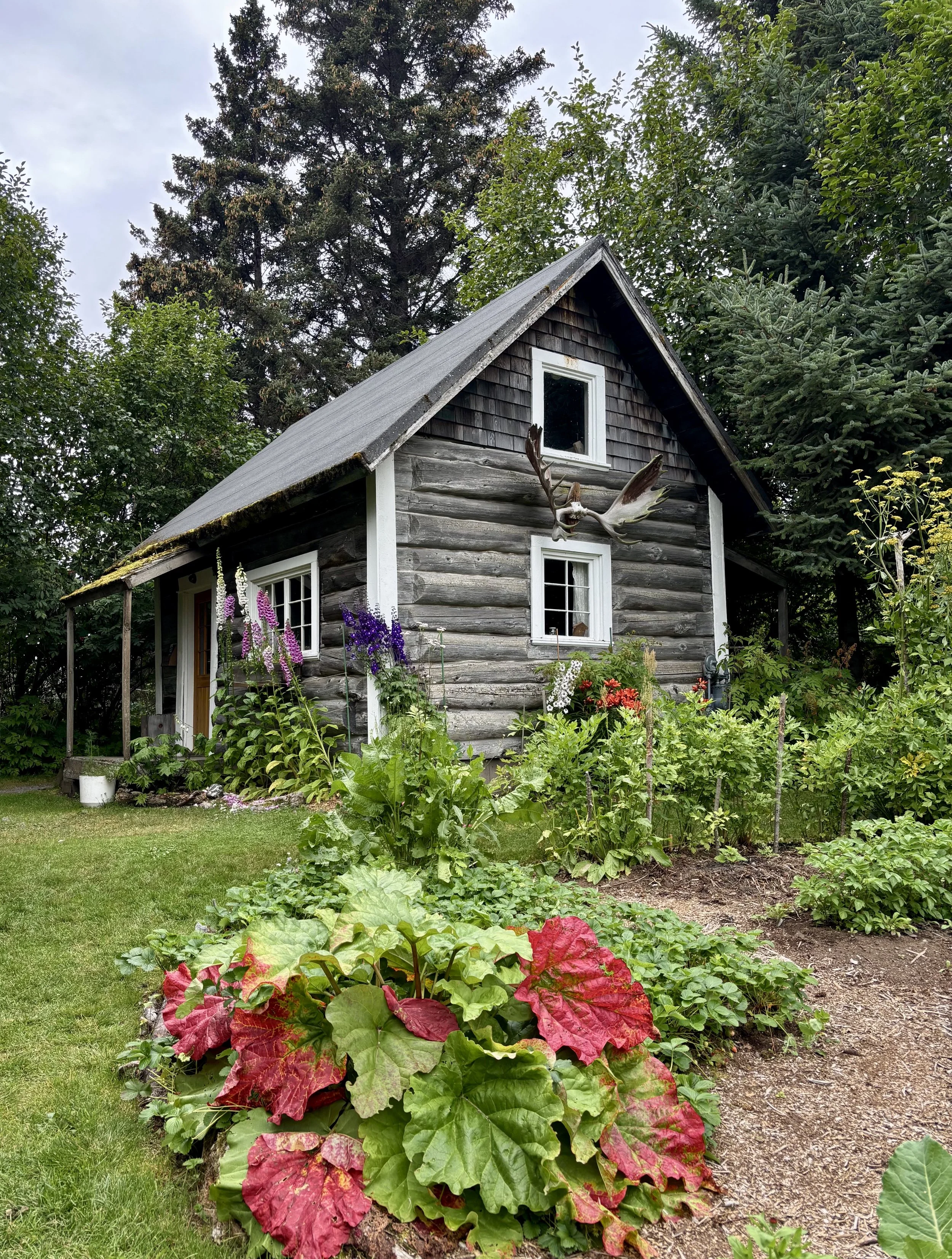
Pratt museum pioneer cabin with rhubarb and gardens
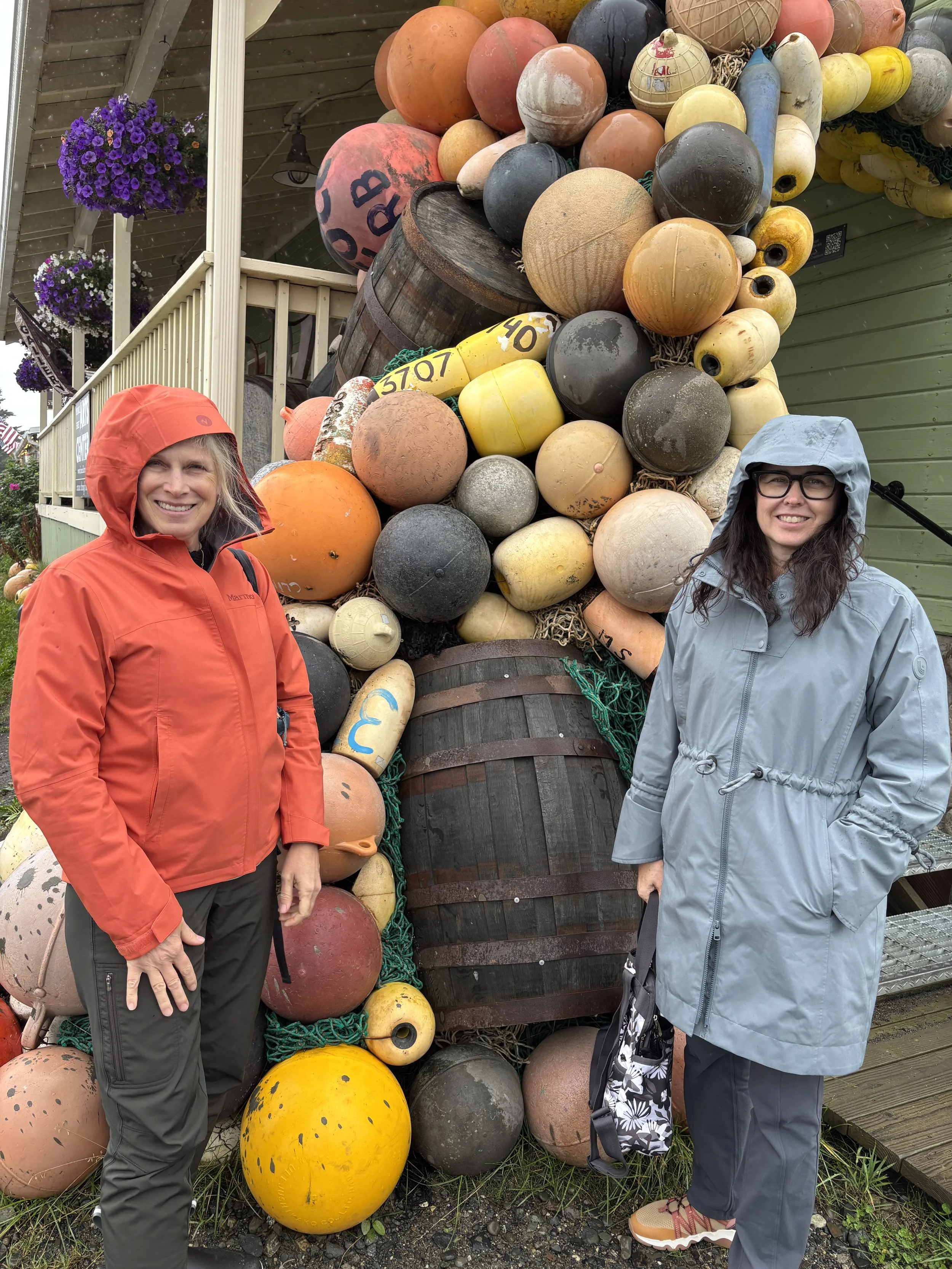
In a January 15, 2021 story called “Floats,” Emilie filed one of her first radio profiles for KBBI listeners with an articulation of Amos Wood. Wood was a Washington resident who had collected glass fishing floats along the shores of Kachemak Bay and left them, along with a notebook describing his shoreland pursuits, to the Pratt Museum. Emilie highlights Wood’s words as she examines the floats, describing them as “round, the greenest of green, hand-blown in Japan of glass, similar to sake bottles, but with more bubbles than machine-blown balls.” She shares with her listeners that, by Wood’s own admission, he sought out the floats “for the sake of considering transition and launch.” For her listeners, Emilie sets Wood’s objects among other curated “treasures of nature - animals, crab carcasses, an aged bone, a sea urchin, a clam shell” that surround the floats in the museum. These artifacts, she tells her listeners, “are informative, a biological identity of place.”
Emilie’s voice then rises as she expresses reverie and gratitude for the wild abundance at hand, and, in parallel with Wood’s writing, elevates motivation and meaning as she examines the floats. In her descriptions, she considers setting, the season, paradox, and the reason for her (and Wood’s) search and narration. “Debris to one person is treasure to another,” she says, quoting Wood. “A monstrosity to one person might be inspiration to another.”
Emilie then shifts her focus from the beauty and mystery and physicality of the Japanese floats back to the “hyper local” of Homer. As she leaves the Pratt Museum, Emilie looks out and around her known place, her community, and offers her story’s send-off across the radio waves: “I saw a young man casually throwing salt from a blue fuel bucket on a public sidewalk, on January 5th, a Tuesday, to keep us from slipping, [to keep us] upright, buoyant. Let’s see how this year feels.”
Resources:
KBBI Radio, home and Emilie Springer bio: https://www.kbbi.org/people/emilie-springer-2
Select Stories by Emilie Springer on KBBI:
Amos Wood, “Floats”: https://www.kbbi.org/search?s=1&q=amos+wood+glass+floats#results
Derek Reynolds, owner of Cycle Logical bike shop, Homer: https://www.kbbi.org/search?q=cycle+logical+celebrates#nt=navsearch
Erin Coughlin Hollowell, Director of Kachemak Bay Writer’s Conference: https://www.kbbi.org/search?s=1&q=kachemak+bay+writers+conference#results
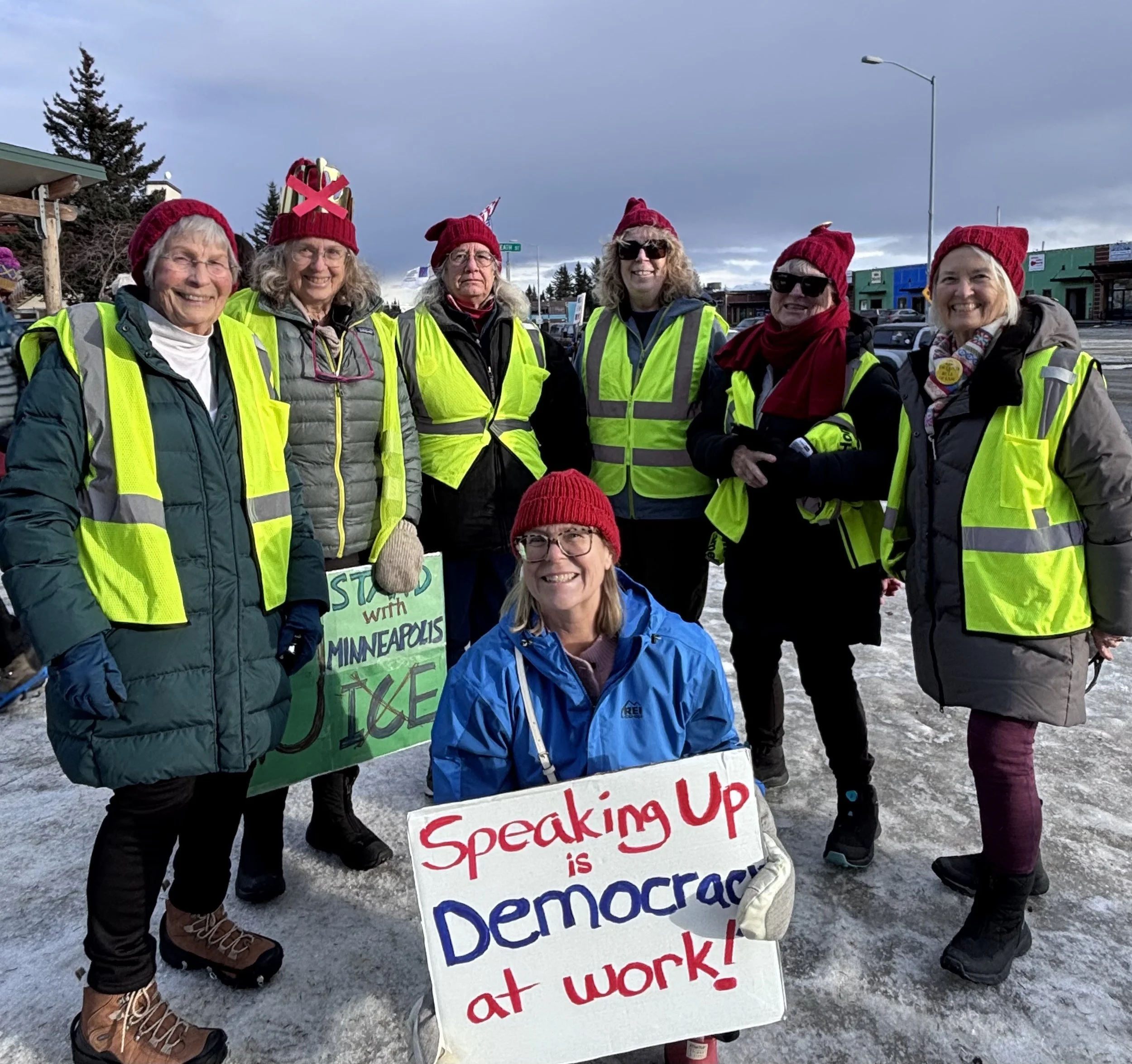
Prevalence of “Red Hats of Resistence” https://www.kbbi.org/search?s=1&q=red+hats#results
All Photos and Writing by Tracy Nordstrom