

Only in Minnesota, Only Uruguay!
/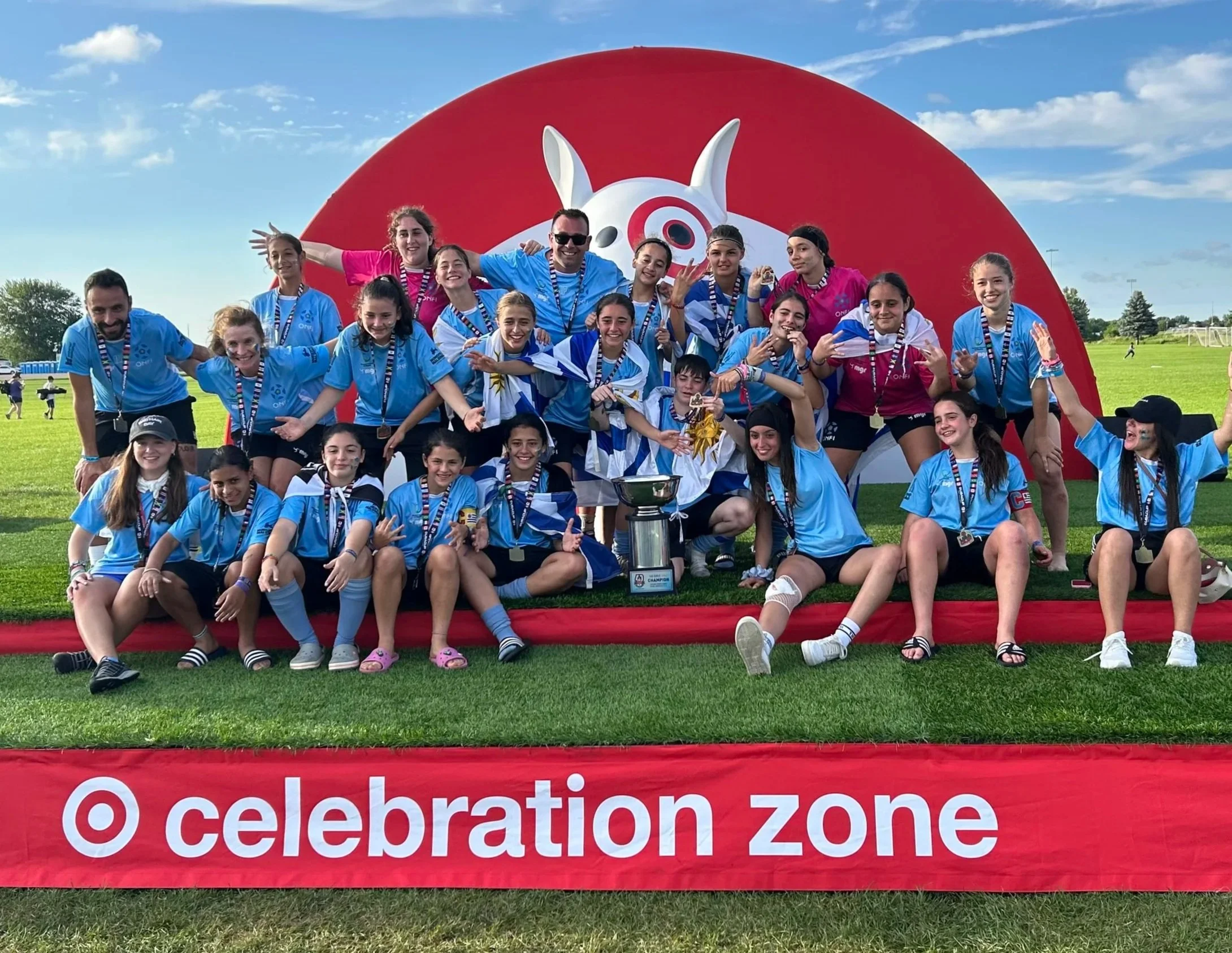
Uruguay u 14 Girls soccer team celebrating at Usa cup in blaine, mn, july 2025
Chasing Hardware
That’s what championship teams are known for. And yet: A sparkling medal or burnished trophy is only one artifact that commemorates years of planning and practice and commitment to sport. This past summer, an exemplary, inaugural team of U 14 girls (aged 12 and 13) traveled from Uruguay, an international futbol powerhouse, to compete in the 2025 USA Cup in Blaine, Minnesota. The journey was significant: 5,979 miles from Montevideo, Uruguay to Minneapolis, Minnesota, just over the length of 96,202 regulation sized soccer fields. These girls came to play. They came to win. And win they did, despite distance, bureaucracy, canceled flights, communication mishaps, red cards, inclement skies, and insufficient funds. The team’s story – as individuals, as a collective, as a national symbol of equality – is a doozy.
But this is not that story.
This story is the story behind the victory of 18 girls from Uruguay and the trophy they hoisted. This is the story of the people - themselves transformed by foreign competition and travel abroad in their younger years – who imagined then instigated the chance-of-a-lifetime journey for girls from three regions of a small South American country to the playing fields and family homes of Minnesota. “The first team to make a trip from a faraway country to the USA is always the toughest,” says Gerard Lagos, former professional soccer player and president of the Minnesota Chapter of the Minnesota Uruguay Partnership of the Americas (MUP), a cultural and economic exchange nonprofit that helped sponsor the team. “So many have helped, in big and small ways,” he says, lending gratitude to the lesson of learning from, and investing in, people halfway across our world.
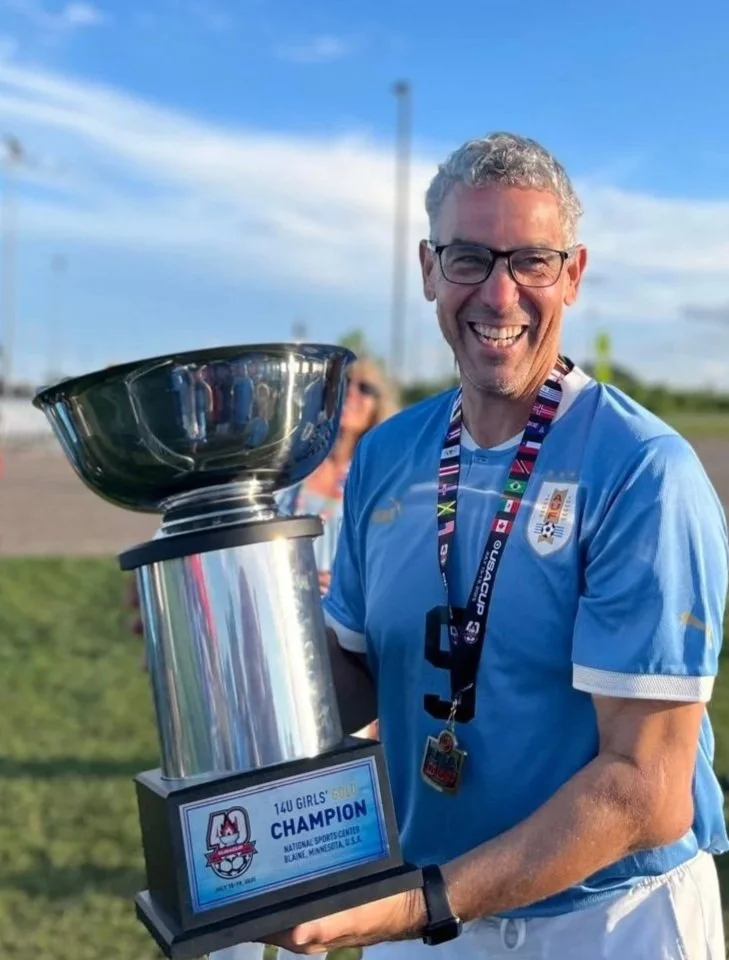
Soccer advocate and Minnesota uruguay Partners President, gerard lagos, celebrates the u14 team from uruguay
Early Lessons
Uruguay holds a piece of Gerard’s heart. As a middle school student, Gerard and his family left Minnesota to experience Uruguay, study Spanish, and play soccer. Serving as sabbatical for his schoolteacher father, the country of Uruguay and competition abroad left its mark on young Gerard. “I found success through soccer,” he remembers. “And it allowed me to stay longer than the school year, actually.” That shot at independence instilled confidence in Gerard and, he notes, sparked a life-long interest in soccer as a connector.
About the same time, another young athlete, Maria José Pesce, honed her stride running track and clearing hurdles in Mercedes, Uruguay. Her father, a physical education teacher and Olympic rowing coach, got a call that “10 student athletes from Minnesota were coming and they needed student families to host them,” Maria José says. “Barbara Cox [from Minnesota] was in that group. She was a track and field runner, and Barbara said, ‘I want to be with a top-level athlete.’ There were not many track and field runners in Uruguay, so they found me!”
Maria José’s mother taught English in a nearby school and at home, so the young athlete and her family were well-positioned to host Barbara. What started as a brief sports exchange has endured; Maria José and Barbara are still close friends, having visited each other in Uruguay and St. Paul, Minnesota over the years. They have sent their own children to visit each other’s homes, and when you see them together now you feel the giggly girl energy of their high school years that still energizes their friendship.
For her part, Barbara Cox says she is still amazed that her brief 1 month stay in Uruguay with Maria José changed her life so completely. “I had traveled before,” Barbara offers, “but it’s different when you make friends.” She says she and Maria José had an instant connection, despite their language difference. She continues:
I was 16. I could barely speak Spanish. I went to a great school back home, was popular, whatever. But no one in Uruguay knew anything about Mounds View High School or Minnesota! So, when you are young – wow - you realize the world is so big. It makes all these little things you are going through seem, well, it gives you perspective.
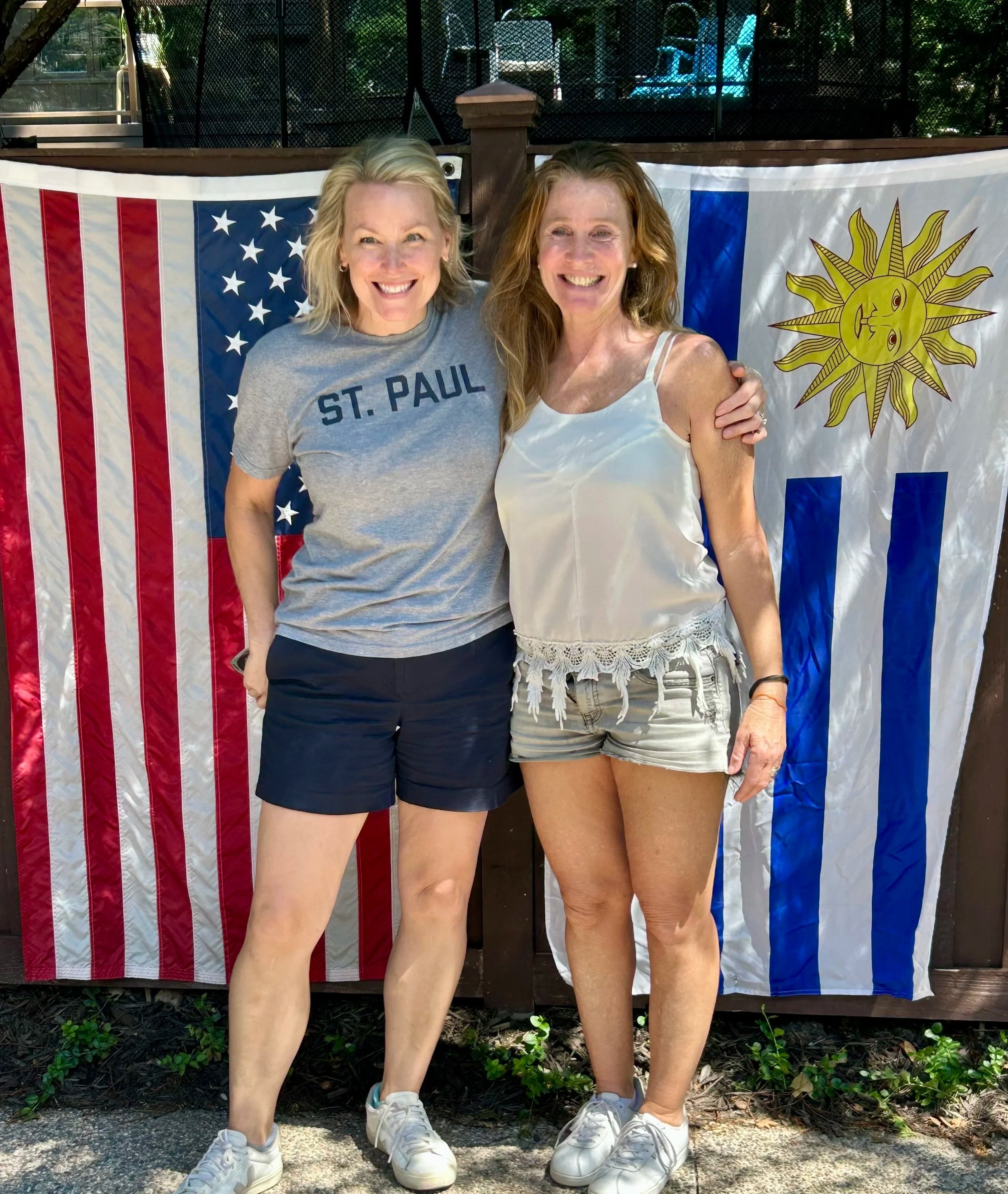
Barbara Cox and Maria Jose Pesce, longtime pals, in St paul, Minnesota, July 2025
The following year, it was Maria Jose’s turn to venture to Minnesota where she ran track and stayed with 2 families during her studies and got to spend her Christmas holiday with Barbara and her family. “I earned a scholarship for one year, my senior year in high school, to compete and study at The Blake School. Partners of the Americas paid for my ticket. My parents couldn’t pay. ‘We have 4 kids,’ they said, ‘this is impossible.’” But her parents knew Maria José would leave their small town for a time, and should, and they supported her venturing forth. “Sports were important to them,” she says. “They knew how sports help you earn important skills, and to be resilient, to overcome.”
The Big Idea
Gerard had envisioned bringing an Uruguayan youth team to Minnesota. As a long-time youth coach in St. Paul, and as a parent whose own children benefited from soccer play abroad (as he had), Gerard imagined “a homestay and cultural experience” for individual team players in addition to participation in a competitive tournament. He knew that planning for such an exchange would be complicated; he anticipated multiple conversations and collaborations and got to work.
In 2022, Gerard met with Rachel Limón, Regional Trade Manager for Latin America at the Minnesota Trade Office. Gerard helped Ms. Limón coordinate a Minnesota visit for then-Uruguayan Ambassador to the United States, André Durán Hareau. In April 2023, Ambassador Durán Hareau arrived in the Twin Cities and visited Sister City, Montevideo, Minnesota (a small town about 130 west of Minneapolis). Gerard also arranged a tour of Allianz Field, home of the “Loons,” the Minnesota United Football Club (MNUFC), Minnesota’s professional men’s soccer team. There, Ambassador Durán Hareau met the leadership luminaries of the team: MNUFC owner Bill McGuire, team CEO Sharri Ballard, and team Development Director (and brother of Gerard), Manuel Lagos. A meeting with Minnesota Governor Tim Walz and leaders of The USA Cup cemented the official foundations for a Uruguay soccer team exchange.
A travel grant from MUP enabled Gerard to travel in April of 2024 to meet face-to-face with key sports supporters at the US Embassy in Montevideo, Uruguay. Because of interests on the Uruguay side, Gerard says, the meetings “focused our mindset on using a girls’ soccer team as a means to have an impactful cultural exchange” and create a partnership with Uruguay’s youth soccer organizers, Organización Nacional de Fúbol Infantil,” or ONFI.
Maria José Pesce was instrumental in making that meeting happen; a meeting, Maria José says, that was years in the making: “As early as 2020, I was part of the Sports Committee of Partners of the Americas in Uruguay, and we were talking with MN Partners (MUP) about getting a team to Minnesota.” She continued: “Uruguay is well known for its soccer and had never participated in the USA Cup. At first, the thought was to send a boys’ team, because they have been so competitive.” Maria José met with the US Embassy Head of Cultural Exchange who supported a female team for the exchange. “She was very interested in getting more girls involved,” Maria José remembers. “Her strategic line was to develop women and girls with sports and opportunity, to build equality and quality.”
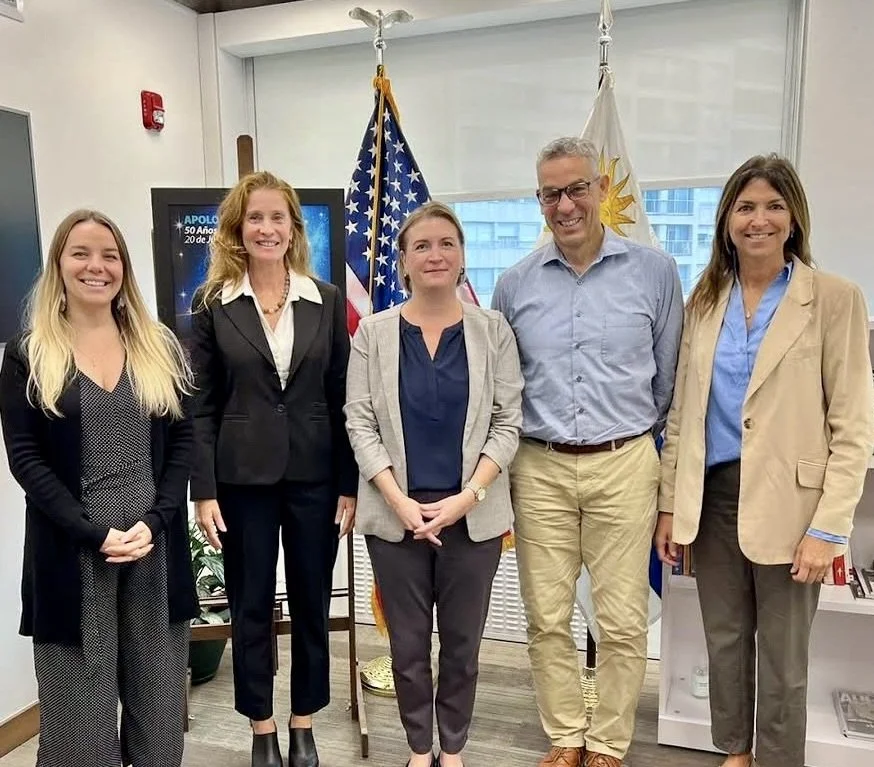
Officials at the US embassy in uruguay: Maria josé pesce (second from left) and Gerard lagos (second from right) in discussions for a soccer and cultural exchange to minnesota, 2024
A New Plan and New Partners
Kerstin Jourdan, an appointed official at ONFI, was at that auspicious meeting at the US Embassy with Gerard and Maria José. A single mother raising a strong, independent daughter herself, Kerstin pushed hard for the opportunity for Uruguay to send a girls’ team to Minnesota. “It is a new time. A time for girls and women to thrive. I am excited to be part of that new wave,” she offered.
With Kerstin’s assistance, ONFI approved a selection process to field a team of highly competitive athletes from 3 regions across Uruguay. Maria José, who was briefly between full time jobs, worked closely with Gerard in Minnesota, and Kerstin in Montevideo, and took time to fundraise for the effort. She researched and arranged transportation, housing, and all the logistics necessary to make an appearance in the USA Cup possible. “We had enough money raised to send 18 girls plus 4 adults,” says Maria José. She still needed funds to supply two coaches, a team doctor, and a coordinator who could accompany the team to Minnesota. Uniforms? Equipment? All necessary for a trip to happen. Maria José’s fundraising and grant writing continued.
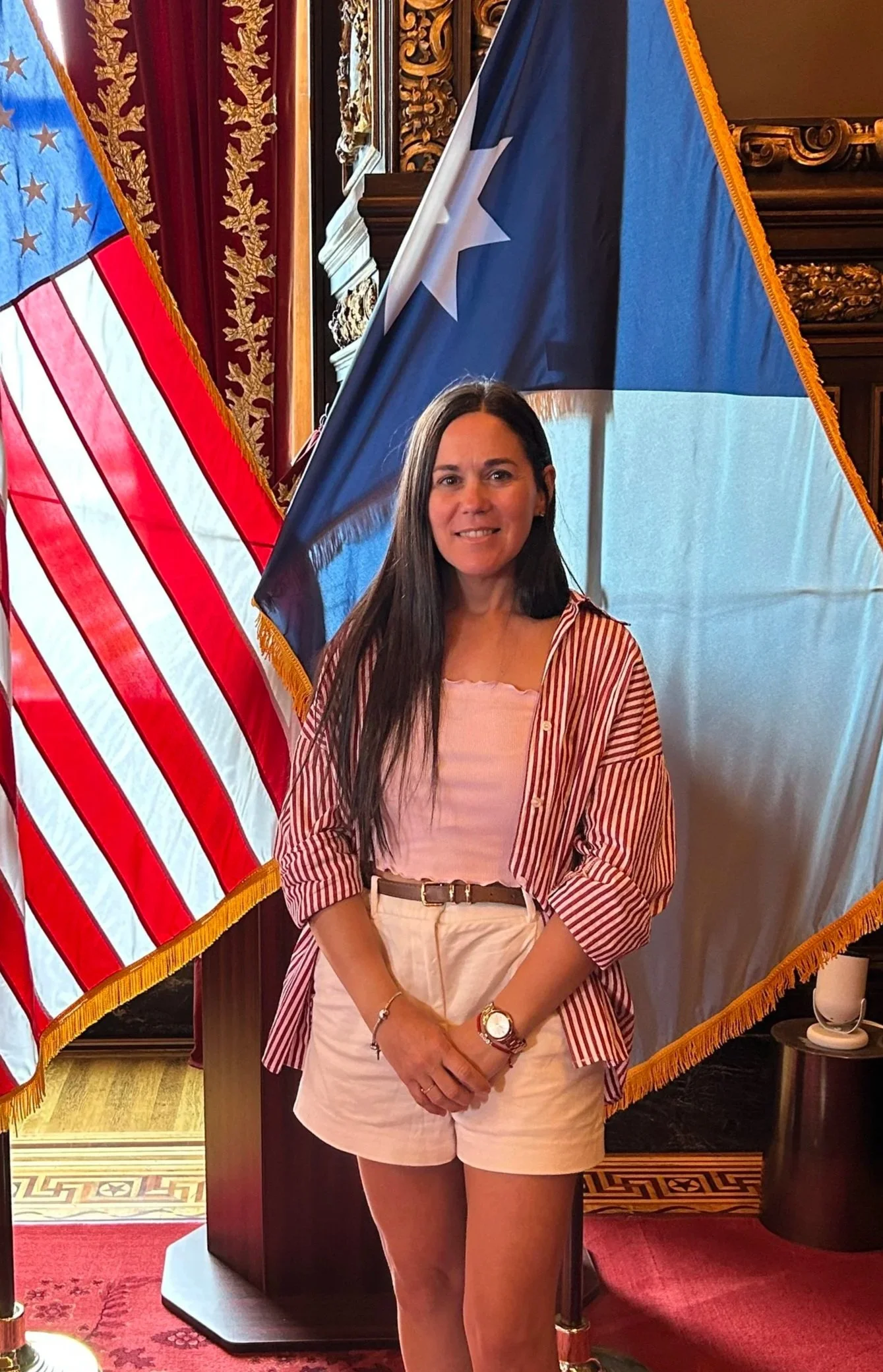
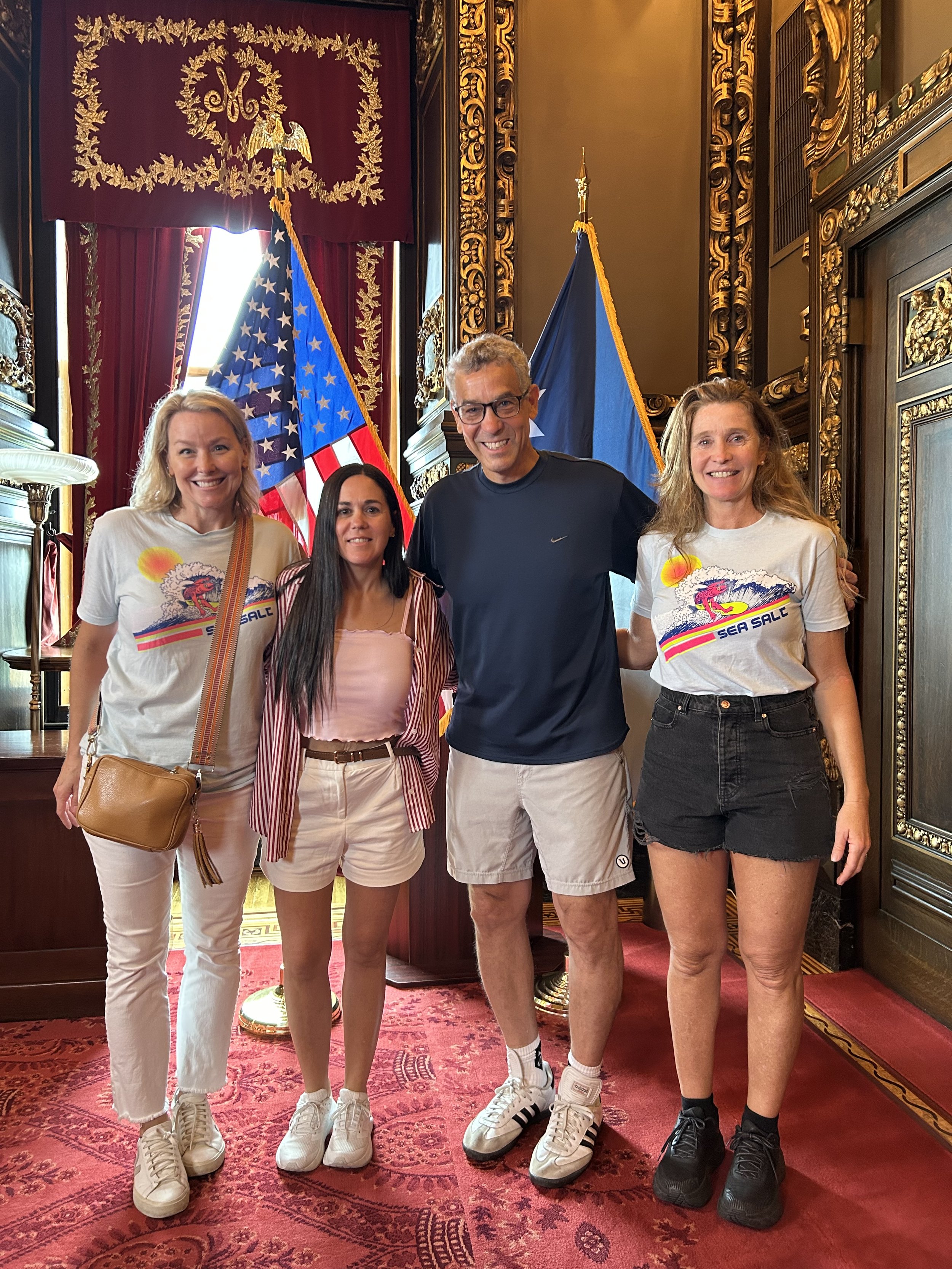
Kerstin Jourdan, onfi official, visiting minnesota state capitol, july 2025
With Kerstin’s direction, the team selection process was to be “inclusive” and support “geographic and economic diversity” of female players from different parts of Uruguay and from different economic situations. Maria José and Kerstin attended finals in 3 regions of Uruguay to identify high quality athletes. They met with parents of the prospective players and discussed the proposed plan: one week of competition in the USA Cup (housed in college dormitories adjacent to the Blaine Sports Center with team supervision) plus a one-week homestay with volunteer host families. The hope was to place the Uruguayan girls with Minnesota families who had daughters that played soccer and knew some Spanish. Maria José says the Uruguayan parents were excited about the competition but expressed concern about their daughters staying with unknown families so far away. She remembers: “One parent said, ‘Our girl has never been away from home. No way!’” Meanwhile, Kerstin arranged for the regional government of Moldonado, Uruguay to pay for team uniforms.
Gerard got to work lining up host families in Minnesota. He leveraged contacts at St Paul Academy, his alma mater and the school his children attended. He also relied on Barbara Cox, a fellow SPA parent and MUP member (and, coincidentally, Maria José’s Uruguay Minnesota pal!) to spread the word about needing families for the homestay. “Can you believe it? Gerard and I learned about our Uruguay connection while standing on the sidelines of a soccer game at SPA,” an incredulous Barbara offers about the convergence of overlapping experiences and friendships. Barbara continues: “We discovered our mutual ties to Uruguay just a year earlier when Maria José’s daughter, Manuela, was staying with us.” Barbara says she was eager to help secure host families and coordinate homestay planning for these Uruguay girls because her own experience so many years earlier had been so meaningful. “My dad had been active in Partners [Minnesota Uruguay Partners], and he really wanted me to go to Uruguay. All these years later with Maria José, we have built our careers, had children, and we are still in each other’s lives. I see this [exchange] as a way to continue forging important international connections.”
Maria José worked with Gerard to set up Zoom calls between the confirmed Uruguayan team players, their families, and the families and girls in Minnesota who would host them. By now the coaches and team doctor were in place and they joined the calls, as well, exemplifying the “village” approach to planning. Maria José stresses the importance of those early calls: “They allowed for parents to see other parents’ faces, for the girls to get some face time in the protection of the group, for everyone to ask questions, and learn more about Minnesota, and build trust.” Emails and WhatsApp numbers were shared to facilitate personal communications. Kerstin Jourdan anticipated that more intimate connections between the athletes would happen via social media, saying: “Girls, you know, they share and gossip between each other, but not with adults!”
Grit
The hard-earned flight from Uruguay to Minnesota in July 2025 was delayed 24 hours due to storms. Team Uruguay had been chosen to light the cauldron at the tournament’s Opening Ceremony in Blaine, and their plane was so late they went straight from the airport to the fields: no meeting their Minnesota families, no time to catch their breath, or rest, or change clothes. Then the skies opened and rain and lightning canceled the event. The rain kept on for another full day, delaying game play. Maria José describes the energy of the Uruguayan team in that crucial moment, despite the unexpected setbacks: “These girls are very competitive. They are champions from their home teams. There were more than 20 countries represented at the USA Cup, 15,000 kids. We were disappointed at the delays, the cancellations. But then we played. We won. Then: we won again! And even with other challenges on the field, we kept winning.”
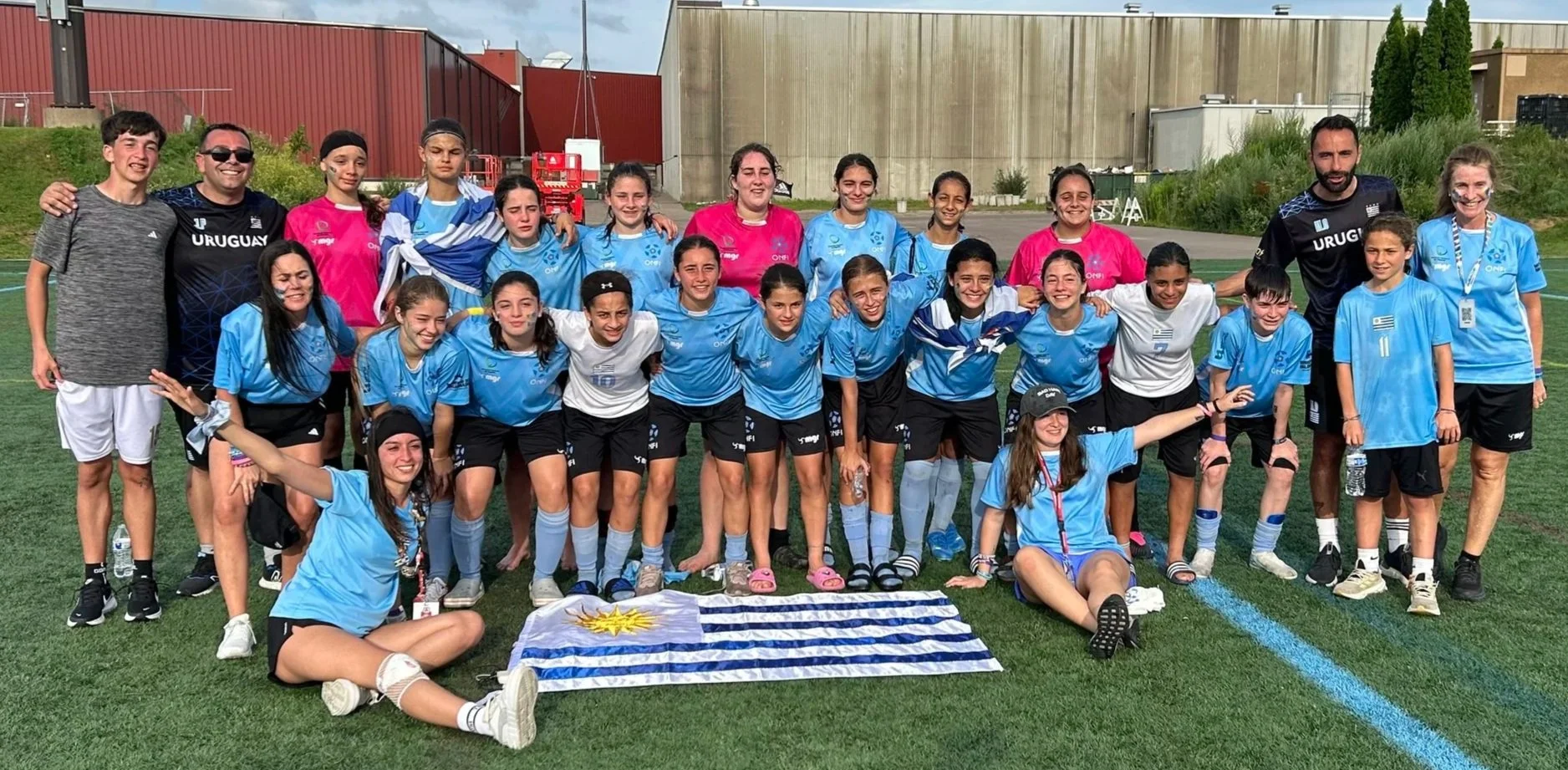
Uruguay girls u 14 team arrives at the National sports center in blaine, minnesota ready to compete
By all accounts, the competition of the week was exhausting and exhilarating for the players and supporters who stood on the sidelines cheering “Uruguay, Nomá!” [short for “Uruguay, No Mas!” or: Only Uruguay!]. Barbara Cox describes meeting the girls at the opening reception for the tournament: “I was right there hugging and kissing them [alongside Maria José]. I was this random lady, they had traveled for so long, and they were open to meeting everyone, to the excitement. I was struck by that. I was touched. They were ready for this experience and wanting it.”
The 18 girls from Uruguay won their U14 division. Their inaugural tournament appearance showed an aggressive, physical form of play and an unexpected ease with each other, despite having come from different regions around Uruguay and not knowing each other well. Their time together in the dorms was helpful, even with their unfamiliarity and individual flashes of homesickness, Kerstin recalls. She says: “The girls got stronger as we went through the tournament. They stuck together, they supported each other. That’s what we call Garra Charrua. Garra Charrua means overcoming obstacles and giving our all to turn things around.”
The Homestay
The Minnesota homestay week after the tournament meant shopping at the Mall of America, at Target, the outlet malls, getting coffee at Starbucks, eating bagels, watching “The Notebook” on Netflix, and the TV show ‘Bunk’d” in pajamas, viewing first in English (with subtitles), then again in Spanish. Barbara and Gerard’s wife, Jane, booked tours for the girls of the Minnesota State Capitol and The Minnesota History Museum; organized a visit to the Minneapolis Institute of Arts and a beach day at Bde Maka Ska; and hosted an all-group cookout - an asado - at Barbara’s home with ping pong on the driveway, cornhole, Bad Bunny on the speakers, burgers, cold Cokes, and cake. The Uruguayan girls and the host girls even got a behind-the-scenes, all-access experience of Allianz Field, home of the Minnesota United soccer team.
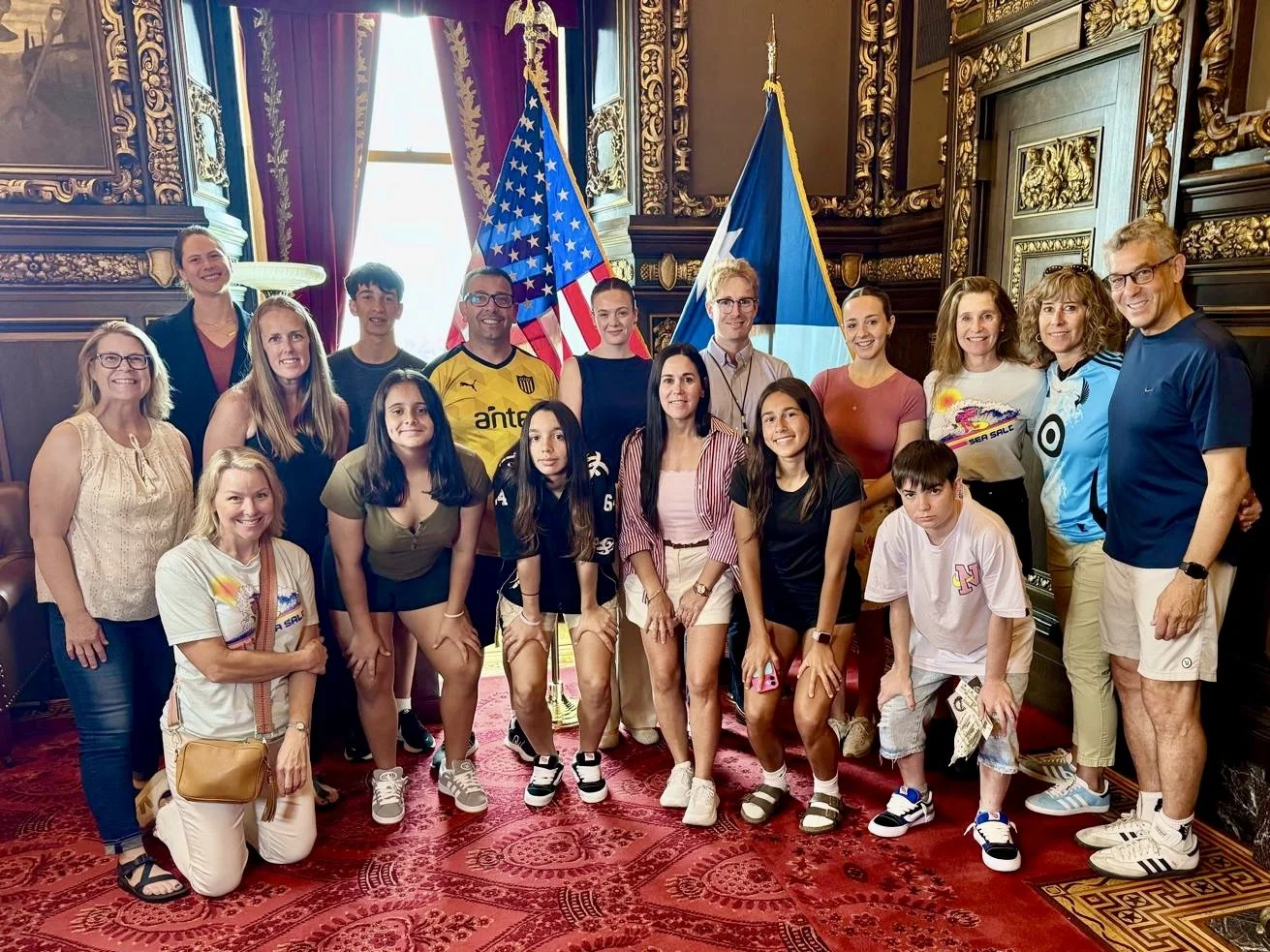
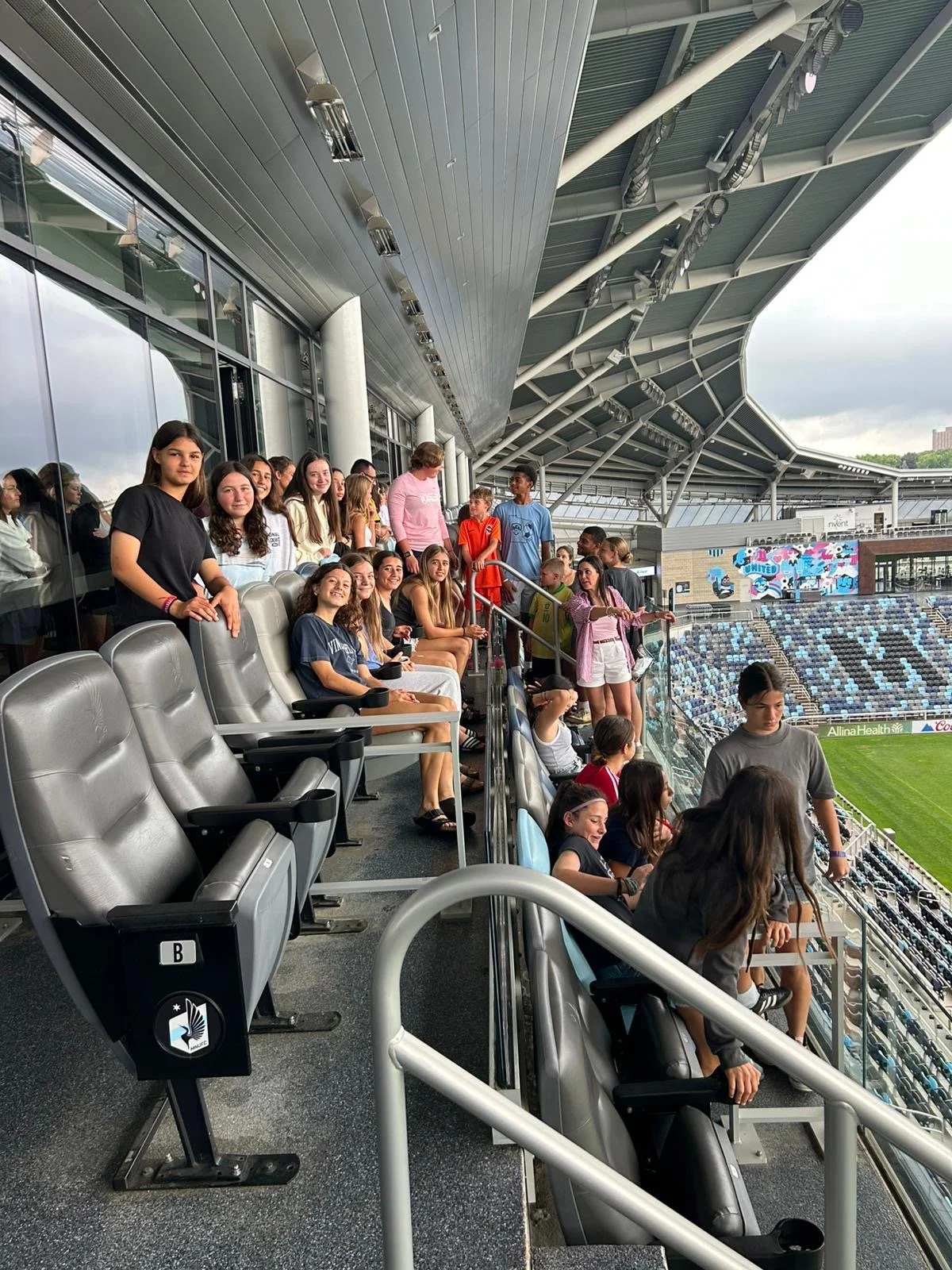
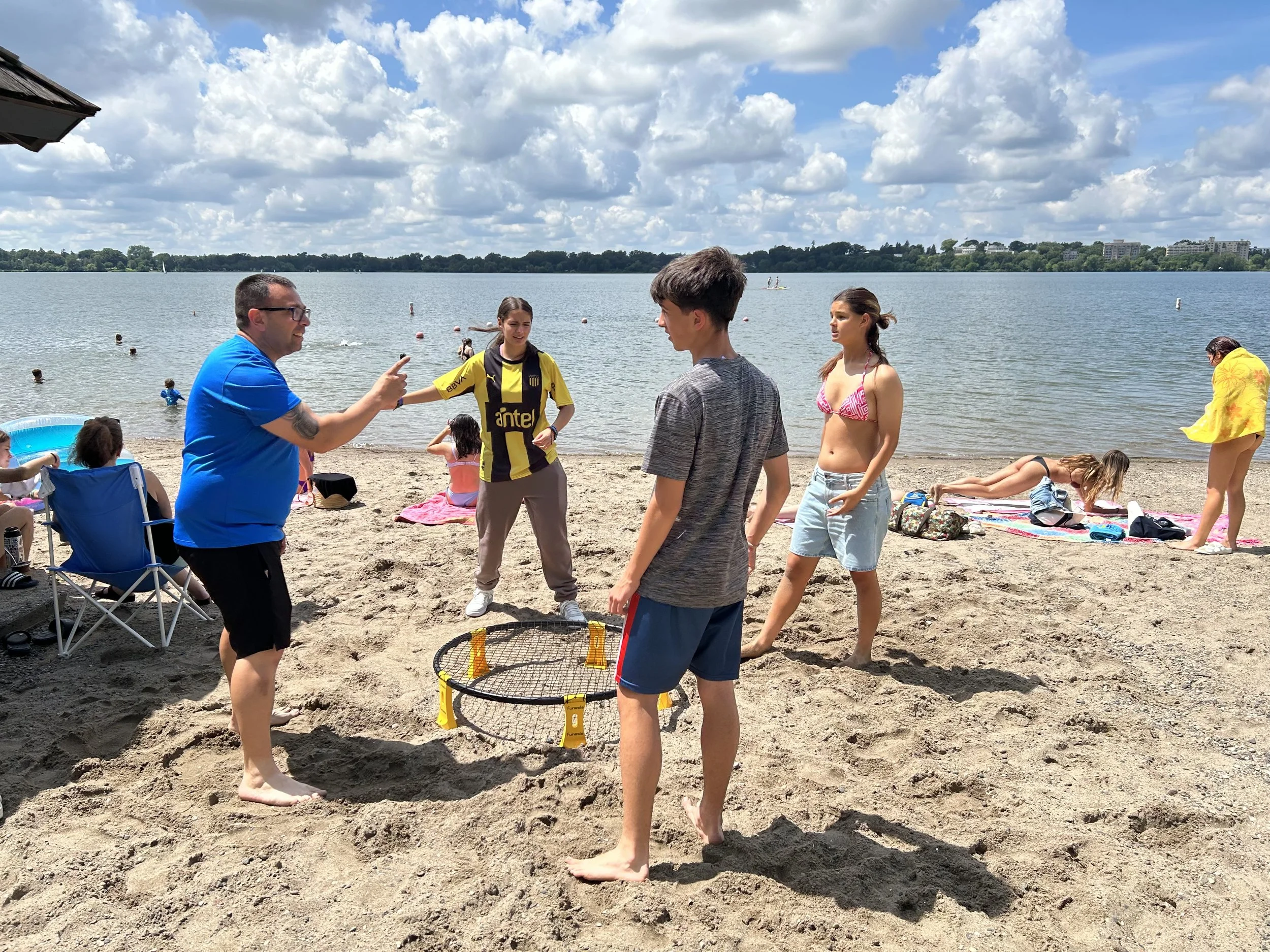
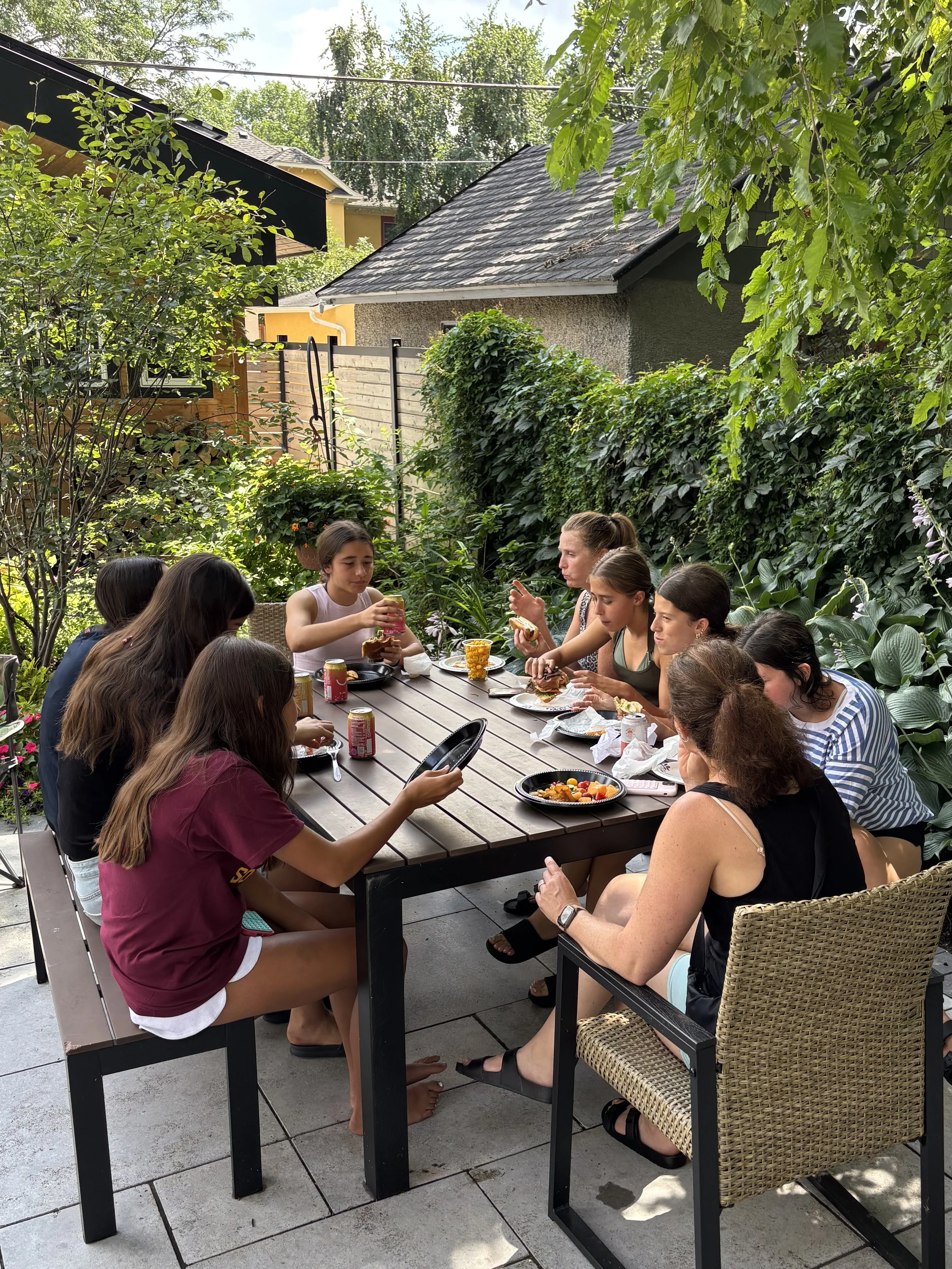
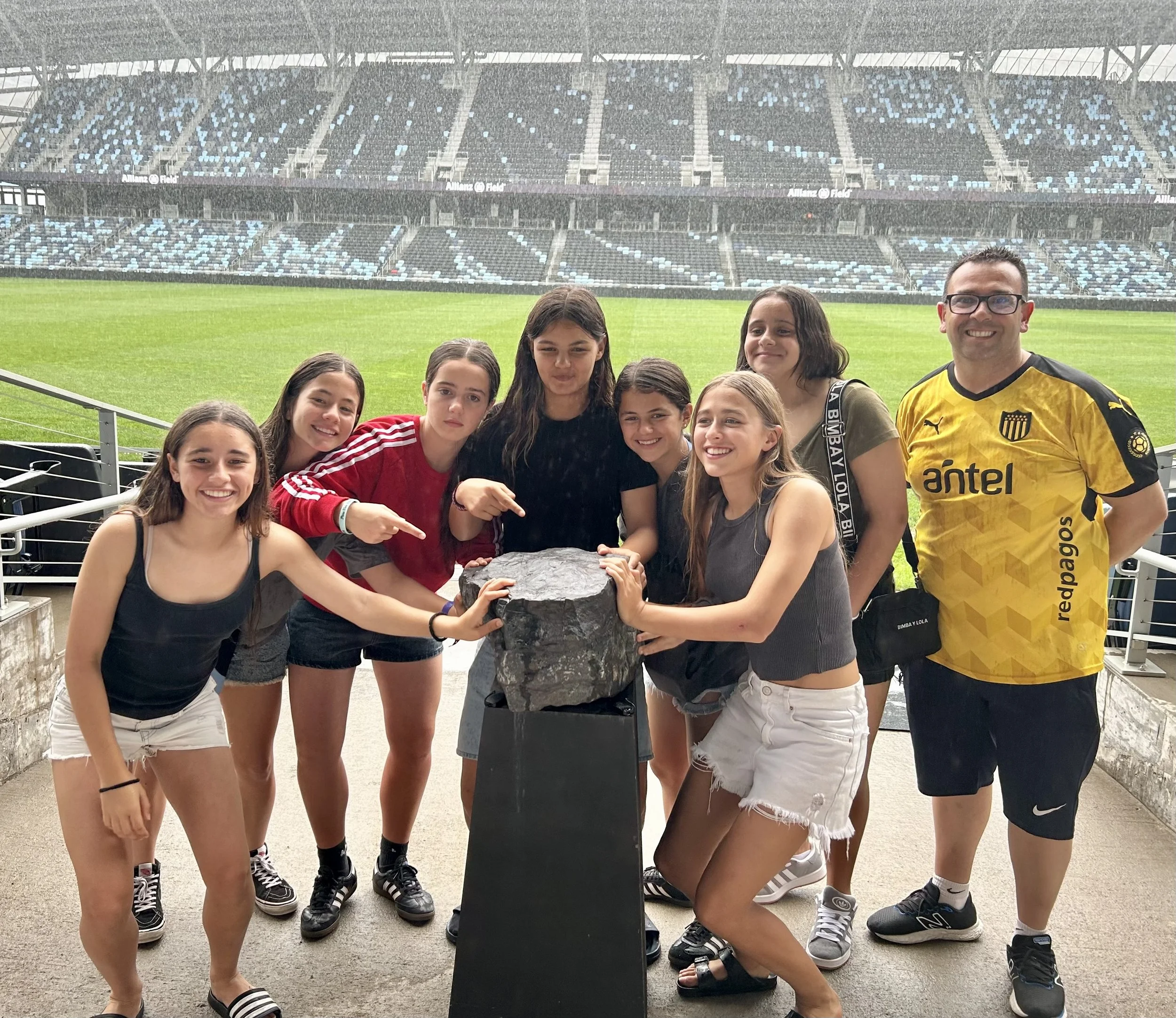
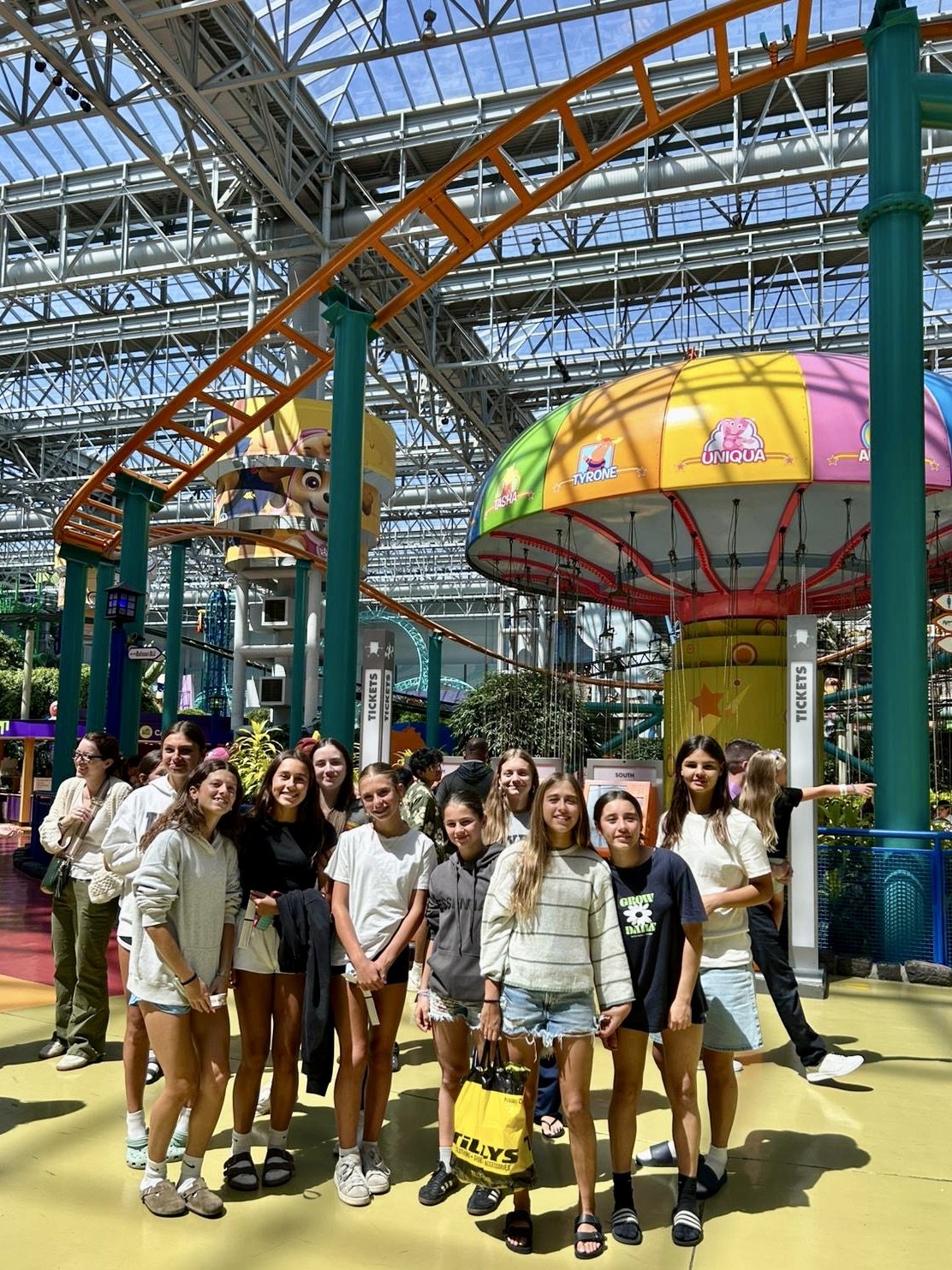
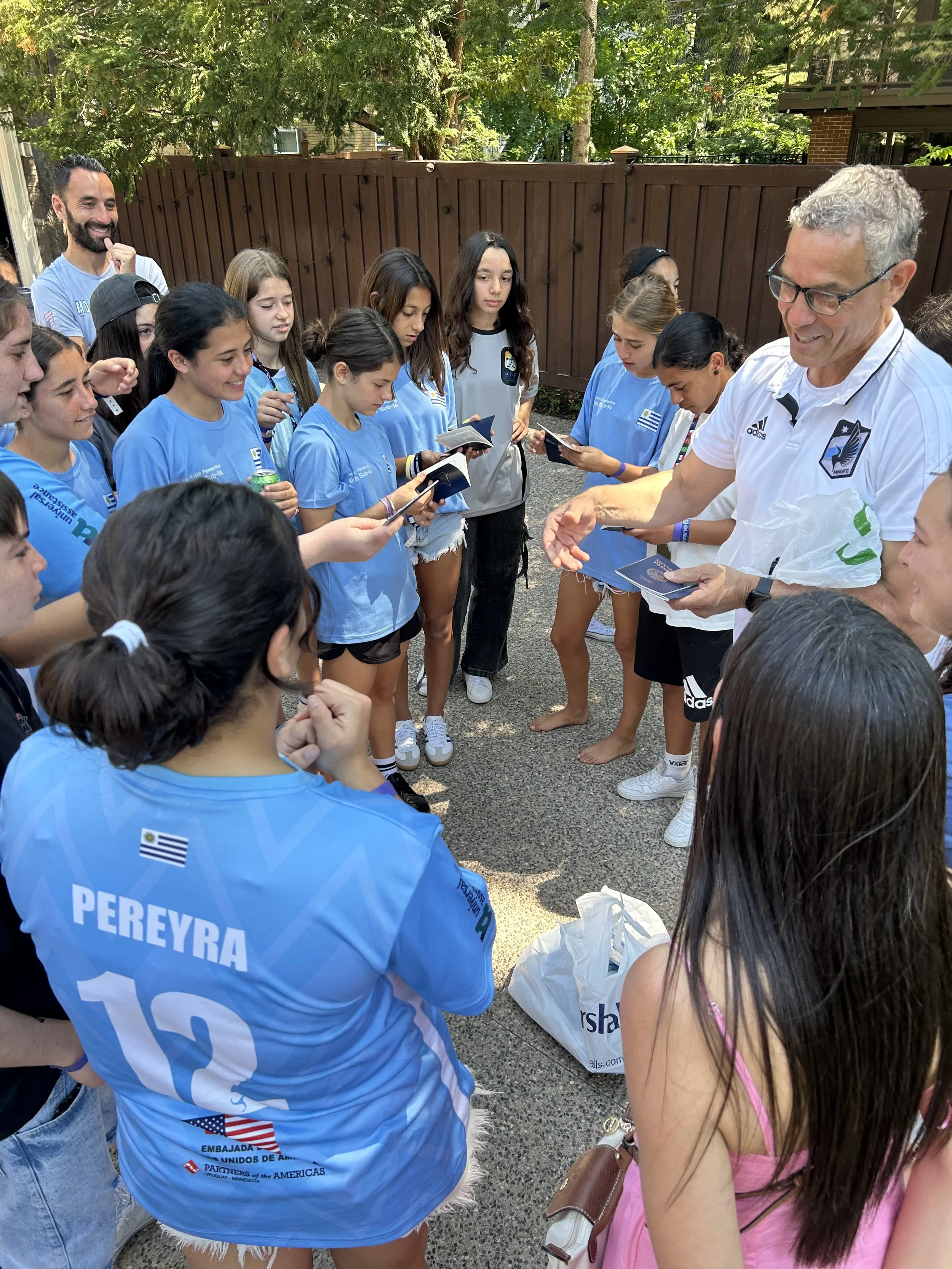
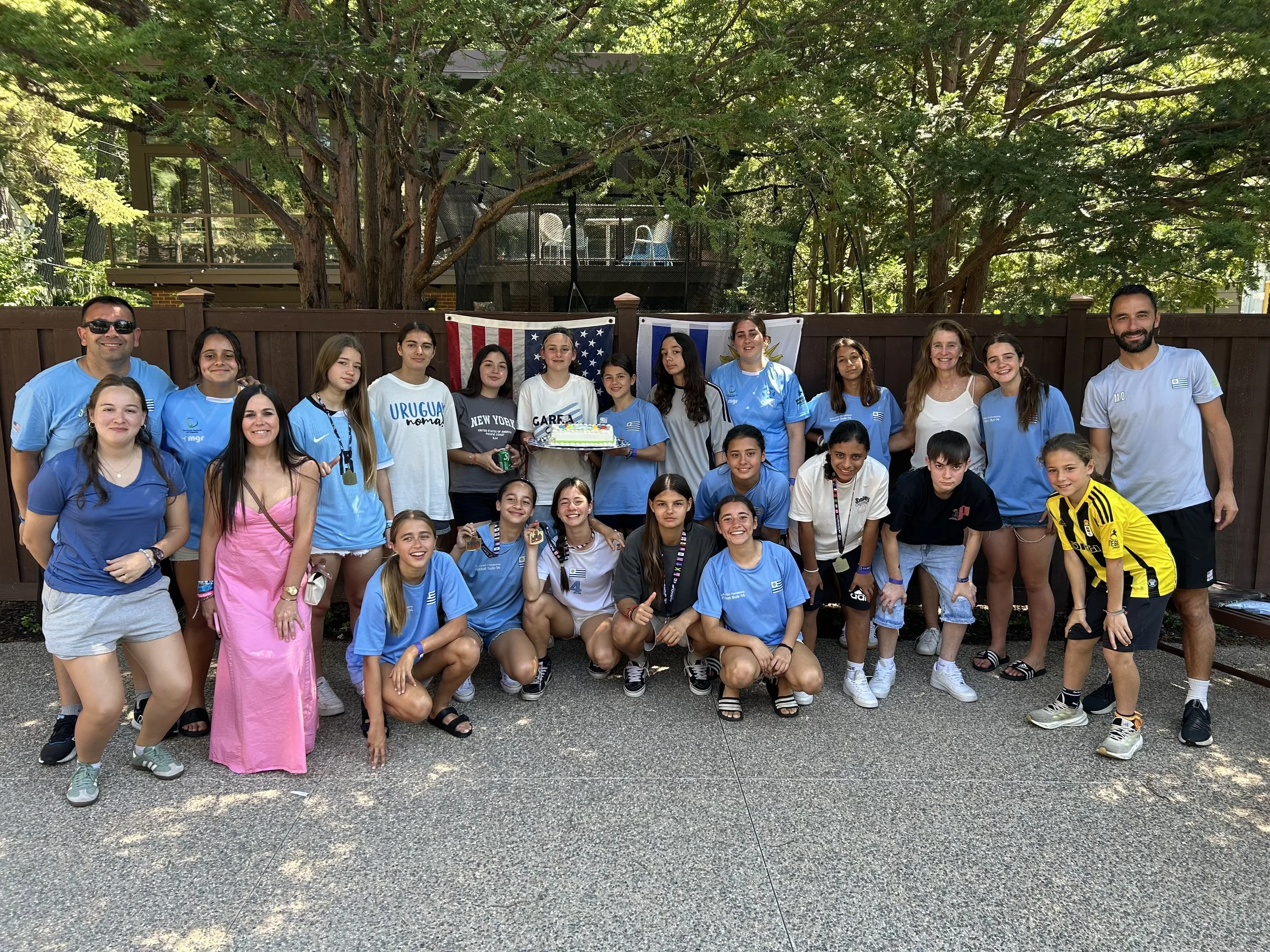
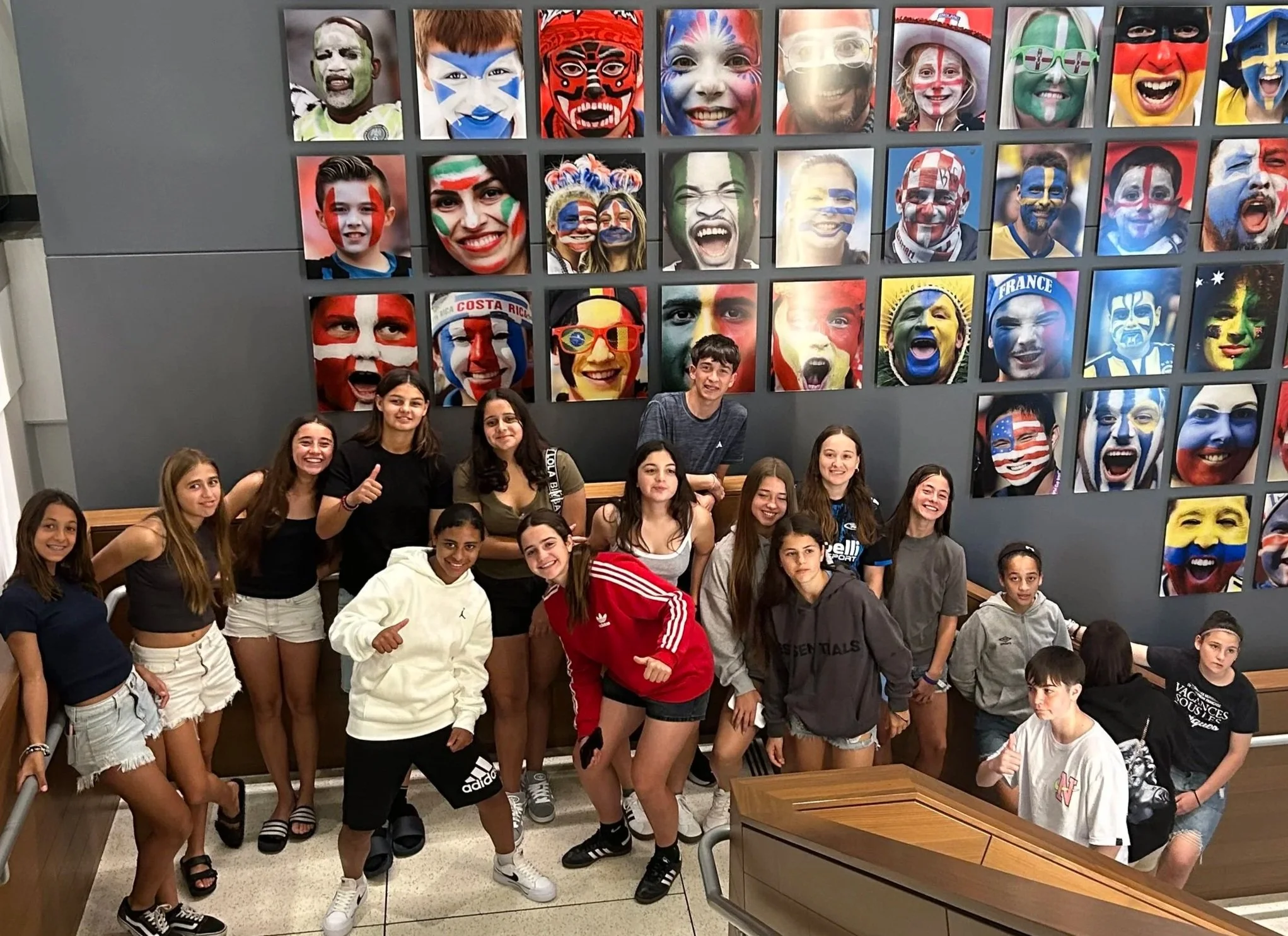
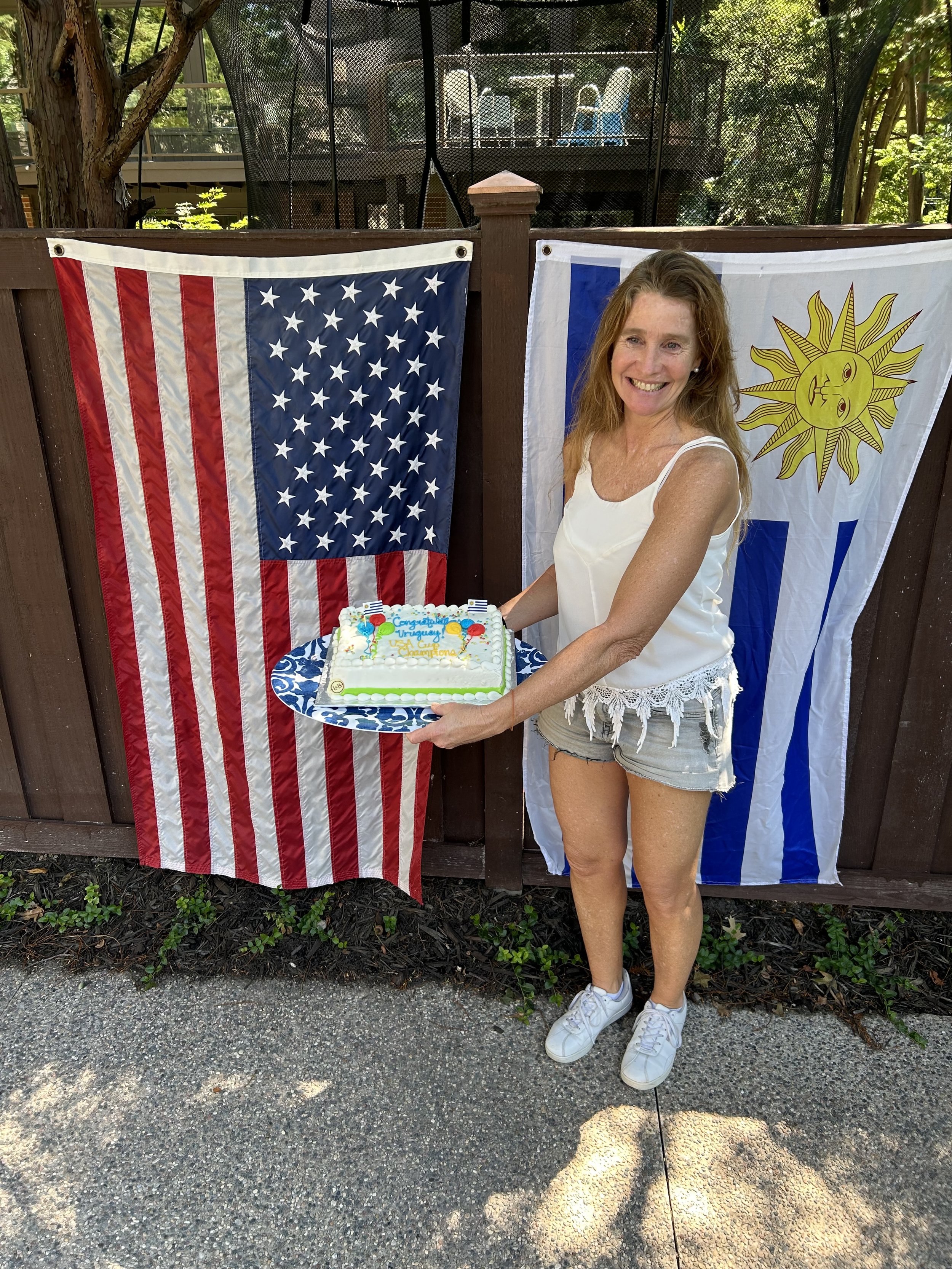
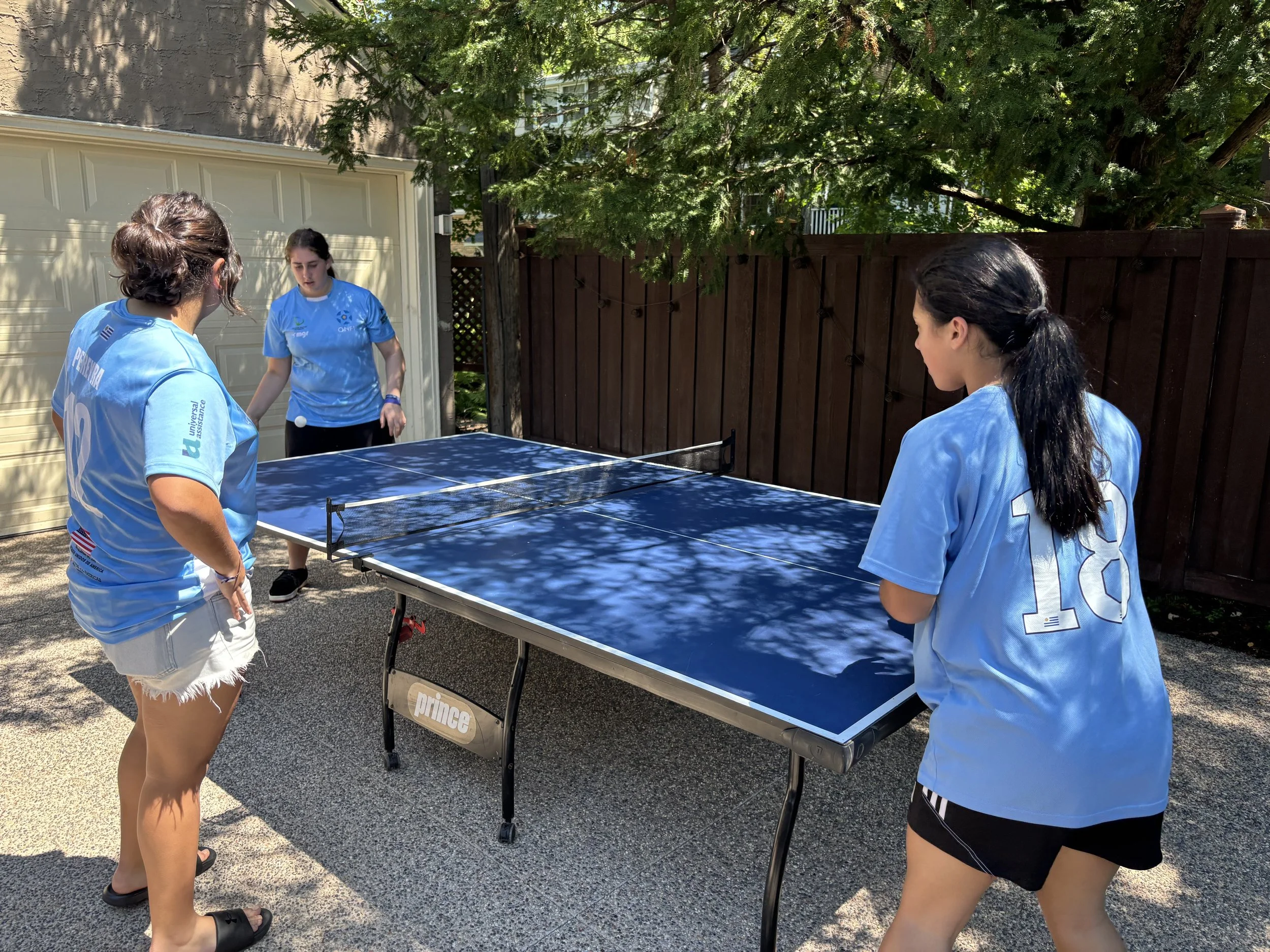
Homestay mom, Kate Lockwood, and her daughter, Phoebe Gottlieb, hosted Camilla and Paula from the Uruguayan team. Kate says: “Phoebe was nervous to host, because we’ve never done that before. But really, the girls have so much in common.” “Well,” Phoebe interjected: “they didn’t like our cats!” Kate laughs, adding, “There were a few cultural things we didn’t understand at first. The girls didn’t eat much the first night. We were serving our meals American style, with big bowls on the counter, where everyone serves themselves. They are used to being served plated food! Once we figured out that hurdle, it was amazing.” Kate noticed a lot of “teenage bonding” when the girls were doing “regular teenage stuff, like eating pizza.” And Kate sensed a decisive confidence boost in Phoebe after only a few days. Phoebe adds: “My Spanish is not that good. I take German at school. But I’m ready to take Spanish again!”
Photographs from the homestay activities show smiles and the small fluencies of friendship. “In Uruguay,” Kerstin offers, “soccer is devotion.” These photos show that soccer can also be the currency of discovery. Minnesota mom Kate offers: “Once the homestay started, the [Uruguay] parents were texting and asking for pictures. They were curious. And now? The Minnesota parents want to go to Uruguay!”
Home Again
Since returning to Uruguay, Maria José has fielded many calls from the parents of the Uruguayan girls. “First, they say ‘Thank you, thank you!’ to the organizers and the Minnesota Uruguay Partners,” she recounts, “And to the host families for the cheering, their homes, their hearts - they gave everything to their girls.” One message in particular stands out for Maria José: For all the organizers - Gerard, Maria José, Barbara, Kerstin, and for the many who contributed – it is the recognition of change. In one Uruguayan mother’s words to Maria José, lo más importante (most importantly): “The girl that came back is not the one who left.”
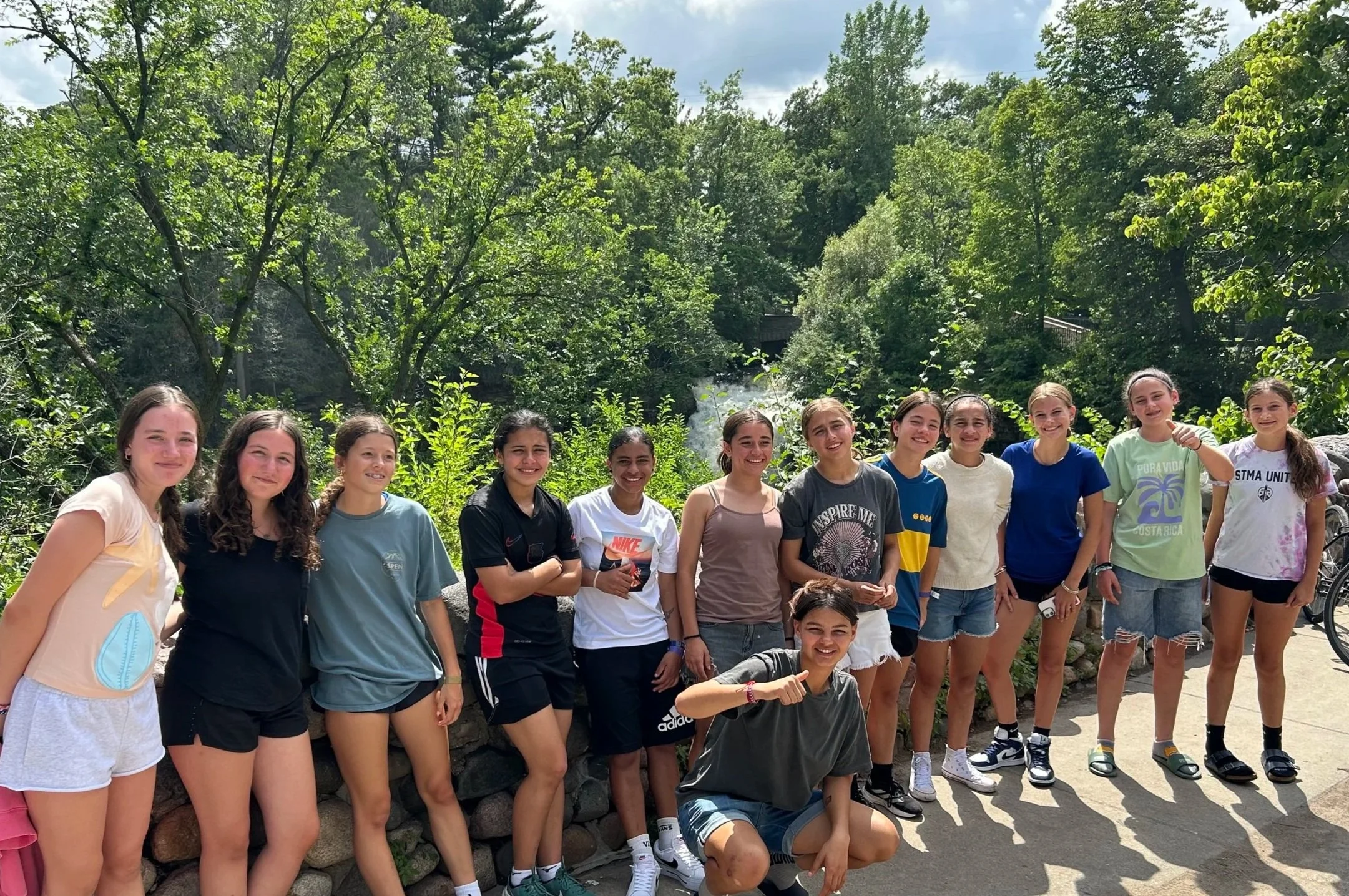
Uruguay u 14 girls visit minnehaha falls, Minneapolis, july 2025
Resources
Minnesota Uruguay Partners: https://www.mn-uy-partners.org
Photos: Tracy Nordstrom